






At Nine Naturals we’re committed to providing you with the information you need to make safe and smart beauty choices. You may have heard the phrase “endocrine disrupting chemical” thrown around in ominous ways. Since these chemicals are certainly a cause for concern, we wanted to help you understand what endocrine disruptors are and how to avoid them.
The Importance of the Endocrine System
The endocrine system influences nearly 100% of our body – and instructs our long-term growth process from the cell level to the organ level. It is comprised of glands that produce hormones, the hormones themselves that travel through the body as messenger and then cell receptors in tissues in organs that receive those messages. Hormones maintain proper functioning of many bodily processes – including growth, reproduction, mood and metabolism.
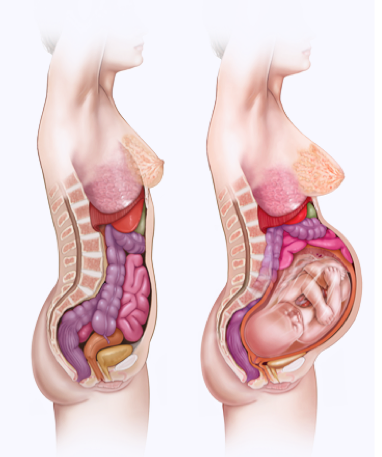
Protecting the proper functioning of your endocrine system is particularly important during pregnancy when a finely tuned balance of hormones regulates fetal development.
How Endocrine Disruptors Affect Our Health
Endocrine disruptors are chemicals that interfere with the normal functioning of the endocrine system. Endocrine disruptors can prevent our bodies from working properly by changing the behavior of hormones. They can also affect the production of hormones themselves causing similar disruptions.
One of the most common ways endocrine disruptors can cause harm is by mimicking estrogen. For instance both, Bisphenol-A (BPA), which is found in many plastics, and parabens, which are widely used as preservatives in food and personal care products, have been shown to act in this fashion. This can impact both fertility and fetal development.
Exposure to endocrine disruptors, particularly at developmentally vulnerable periods in a person’s life (including as a developing fetus or young child), have been associated with
Birth Defects - including deformities and early-term births
Developmental disorders - including ADHD, learning disabilities
Reproductive development – including sexual development and fertility problems
Childhood obesity
Cancer- notably breast, liver and thyroid cancers
Where Endocrine Disruptors Can Lurk
First, consider a quote from this NIH study on EDCs in humans reflecting the prevalence of EDCs
… a consumer who used the alternative surface cleaner, tub and tile cleaner, laundry detergent, bar soap, shampoo and conditioner, facial cleanser and lotion, and toothpaste (a plausible array of product types for an individual) would potentially be exposed to at least 19 compounds: two parabens, three phthalates, MEA, DEA, five alkylphenols, and seven fragrances.
The most common endocrine disruptors are
- Bisphenol A (BPA): These are common in consumer plastics like plastic food containers and the linings of canned food and formulas.
- Parabens: A preservative found in personal care products. On an ingredients label, it is commonly listed with the prefix butyl-, ethyl-, methyl-, or propyl-.
- Phthalates: A chemical found in plastics to help make them more flexible. Also used to hold fragrance in personal care products, perfumes and other products that include artificial fragrances.
- Polybrominated diphenyl ethers (PBDEs): Extremely common in flame retardants – and banned in the EU, but still legal in the US. YES, PBDEs are the reason Nine Naturals and many other organizations warn parents about their children’s mattresses. PBDEs are also found in other consumer products like electronics.
- DDT: These were common in pesticides in the early 20th century, but are illegal in most countries. DDC has persisted in the environment, however, and can be found glaciers, animals in the wild and other parts of the environment.
- Polychlorinated biphenyls (PCBs): Largely banned now, PCBs were used in factories as industrial lubricants and coolants. Now they are unfortunately found in the environment due to factory run-off dating back to the 1970’s.
Tips for Avoiding Endocrine Disruptors
Here are a few key tips to reduce your exposure:
- Avoid using plastics as much as possible, particularly when it comes to storing food and beverages where chemicals from plastics can seep into what you eat and drink. Opt for glass and stainless steel containers.
- Use personal care products free of endocrine disrupting chemicals, such as Nine Naturals.
- Take the time to read ingredients labels. Purchase products from companies that disclose 100% of their ingredients. Apply this practice not only to personal care products, but also to household products and food.
- Be especially wary of fragrances in personal care products and household products. Avoid products that have the word “Fragrance” on their ingredient labels and do not disclose the components of their fragrance.
- Eat organic as much as possible to limit pesticide intake.
At the moment the debate on how to regulate endocrine disruptors is still ongoing. This is why it’s important to both understand the ingredients in a product and to look for products free of chemicals when trying to minimize exposure. At Nine Naturals we pride ourselves in creating toxin-free, 100% plant-based products that are free of endocrine disrupting chemicals. We do the work, so you don’t have to worry.
_________________________
REFERENCES:
Long-Term Effects of Environmental Endocrine Disruptors on Reproductive Physiology and Behavior. Patisual et al. Frontiers in Behavioral Neuroscience.
Endocrine Disruptors and Asthma-Associated Chemicals in Consumer Products. Dodson RE, Nishioka M, Standley LJ, Perovich LJ, Brody JG, Rudel RA. National Institutes of Health.
Endocrine Disruptor. Multiple. Wikipedia.
Steroids and endocrine disruptors-History, recent state of art and open questions. Hampl et al. Journal of Steroid Biochemistry and Molecular Biology.
Parabens. From Environmental Studies to Human Health. Bledzka et al. Environment International.
Endocrine Disruption of the Epigenome: A Breast Cancer Link. Knower et al. Endocrine-Related Cancer.
Phthalates impair germ cell development in the human fetal testis in vitro without change in testosterone production. Lambrot et al. Environmental Health Perspectives.
Developmental neurotoxicity of ortho-phthalate diesters: review of human and experimental evidence. Miodovnik et al. Neurotoxicology.
Transplacental Passage of Antimicrobial Parabens. Towers et al. Obstetrics and Gynecology.
Low dose effects and non-monotonic dose responses for endocrine active chemicals: science to practice workshop: workshop summary. Beausoleil et al. Chemosphere.