Posts Tagged ‘Green Nursery’

Ten Green Resolutions for 2014!

images

A new year has begun! We turn over a new leaf and welcome another opportunity to break old habits and make real improvements in our lives. Many of us spent 2013 contemplating the switch to a green lifestyle, but didn’t know the best way to start.

Our list of 2014 green resolution tips will help you get started! Follow one, two, or all of our tips, and you’ll notice a great change in the New Year.

  1. Rely on Nine Naturals for a beautifully clean 2014! We are proud to carry 100% all-natural, 100% plant-based products that designed to help pregnant women feel beautiful without compromise. Every Nine Naturals product, from our rich Moisturizing Body Cream to our Mandarin + Ginger Restorative Conditioner, will spoil you and keep you, your baby and our environment safe. Check out our luxurious line today!
  2. Opt for chemical-free cleaning products. Did you know that using traditional cleaning chemicals can create indoor air that is two to three times more polluted than the air outside? In 2013, many organizations around the country, including the state of California, began pushing for regulation on chemicals in common household products. Find a list of eco-friendly cleaning alternatives (some of them right in your kitchen cabinet) in our Greening Your “Clean” Routine article.
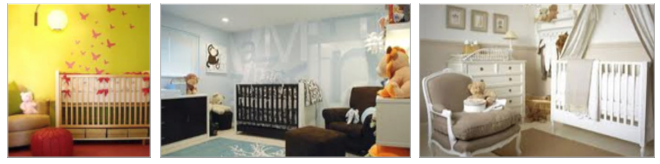
  3. Get in on the green nursery trend. In 2014, expect a boom in the number of new parents considering a green sanctuary for their newborn. But as our popular article makes clear, green nurseries are much more than a trend. From the mattress to the crib to the cleaning products to the air filter, they provide an excellent way to secure a baby’s health during her important formative years.
  4. Vow to steer clear of chemicals at the hair salon. Chemical-heavy treatments like hair dyeing and chemical straightening can expose you to damaging chemicals and even carcinogens. We’ve published several articles on great alternatives to these harsh treatments.
  5. Line-dry your laundry. Take advantage of sunny days to let the heat dry your clothes naturally, which can seriously save on both energy and money. Find more tips on greening your laundry with our blogpost here.
  6. Don’t let product labels intimidate you! At first glance, they’re just so darn difficult to read. But toxic chemicals are a reality in any number of commonly used household and cosmetic products and it’s crucial to arm yourself with the knowledge to avoid them. Trust us - you can become a fast expert on deciphering an ingredient list! Check out How to Read a Label to get you started!
  7. Eat organic whenever possible. This resolution can significantly reduce how much you expose your body to harmful chemicals and pesticides through what you eat. But you don’t always have to make the organic choice. The Dirty Dozen are the foods you should always eat organic (like apples and peaches), while the Clean Fifteen (eggplant, kiwi) are fine to eat conventionally. The Environmental Working Group provides a handy list for both.
  8. Ditch the plastic water bottles. This might be the hardest resolution to keep, since plastic bottles are so convenient and widespread. But these bottles often harbor harmful chemicals like bisphenol-A and phthalates and are an albatross on global environmental health.
  9. Instead, choose stainless steel and glass over plastic. These materials do not include the toxic chemicals that plastic containers can. Have no choice but to use plastic, though? Remember this rhyme for your safety: “4, 5, and 2 — all the rest are bad for you!”
  10. Increase your environmental shopping consciousness. Lastly, do what you can to augment your mindfulness of Mother Earth whenever you shop. Examples of how to do it: buy in bulk, and choose the farmer’s market over the grocery store. Bone up on the many ways you can be a greener shopper with the help of our Green Tip article.

Creating a Green Nursery … a Healthy Space for your Newborn!

Screen Shot 2013-10-09 at 3.00.41 PM

Every mom wants to create a beautiful nursery for her new baby. It’s one of the first physical gifts we as parents give our child and we want it to be as much a manifestation of adoration as four walls can muster.
We at Nine Naturals know the feeling. We also want to help new parents create a nursery that is as safe as it is stylish.
Make it organic? Sure, but let’s be more specific. Setting up a green nursery is not just about following the organic trend. It’s a way of helping to ensure your baby’s health and well-being in his or her earliest years.
Nine Naturals’ recommendations for a truly green and safe nursery:
  1. Keep the room ventilated! An unseen threat to a green nursery is the presence of VOCs, or volatile organic compounds, which are released (or “off-gassed”) by thousands of products. These compounds are used to help paint spread and eventually dry. VOCs pose long-term risks to human health and the environment. And although VOCs are everywhere, it’s indoor air that tends to have higher concentrations of VOCs. Remember to avoid VOCs at all costs, especially in your little one’s new room.
  2. Avoid exposure to harsh fumes that can emerge from traditional paints and lack of air flow. Avoid major home renovations during pregnancy, which can increase chemical exposures, or try to avoid being in the house during the work. Purchase no-VOC paints, and ensure that the future nursery has excellent ventilation — particularly while it’s being painted.
  3. If you must use carpets, be very, very picky. Carpets can serve as home to allergens and dust mites. Further, many synthetic carpets are made with latex backings, and these backings as well as the adhesive used to affix them to floors can release VOCs by “off-gassing.” Looking for an alternative? Try a rug made of natural fibers like wool or cotton that does not come with a synthetic backing.
  4. Buy toys made from natural materials. Ensure that all of your baby’s toys are nontoxic, non-PVC, non-BPA and non-phthalate. In other words, look for toys made of natural materials such as wood or silicone. Before you know it, your baby will be sucking and teething on everything in sight. PVCs can leach harmful phthalates, and BPA (bisphenol-A) can also impact your baby’s long-term well being. We prefer toys made from organic cotton and sustainable wood. Check out Plan Toys for some great options.
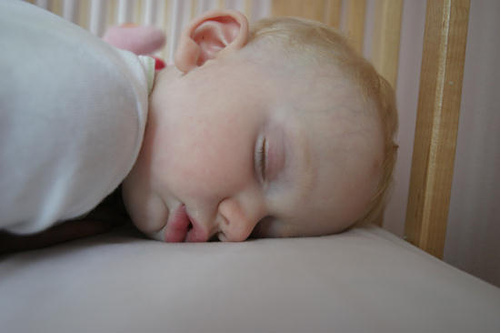
  5. Choose organic or natural fiber bedding. Why? Your baby is going to spend a large part of his or her early years sleeping in a crib. Most crib mattresses on the market contain toxic chemical fire retardants, which have been associated with many health issues. Organic cotton, natural wool, or bamboo mattresses and bedding are friendly to both the environment and your baby’s skin. We like brands like Nook and Naturepedic.
  6. Purchase a crib and baby furniture sourced from certified sustainable or reclaimable materials. Ideal furniture pieces also completely avoid the use of VOC’s and formaldehyde – not only in their wood, but also in their paint, glue, and or resin. Take a look at beautiful designs from Oeuf and Duc Duc or for a cheaper alternative, consider Ikea.
  7. Opt for all-natural, nontoxic, and chemical-free cleaning supplies to maintain a tidy green nursery. You should be able to read and understand, simply from the label, every single ingredient that your cleaning products contain. Green products are environmentally sustainable and their ingredients are safe for your baby to touch or inhale. Our founder Grace uses Dapple in her daughter’s nursery.
  8. The same principles apply to other baby needs like clothing and diapers. You spent nine months making a natural environment for your growing baby in the womb - keep it up in their nursery!

What tips would you add to our list for the ideal green nursery?

Chicago Tribune Reports on Crib Mattress Safety

Caring for a child young enough to rest in a crib? Heed the cautionary findings in Chicago Tribune’s recent expose of dangerous chemicals found in several popular brands of baby cribs.

The feature focuses on “three popular brands of baby mattresses” in particular: Babies R Us, Foundations, and Angeles. The Tribune purchased and ran tests on 11 mattresses from these manufacturers for a group of chemicals called “chlorinated tris,” cancerous toxins that have been known to cause harm for so long that they were “removed from children’s pajamas a generation ago.”

One or multiple chlorinated tris appeared in every single mattress the Tribune’s lab tests analyzed for them. Toxicologists warn that these chemicals “could cause mutations in DNA” and other worrisome “illnesses and injuries” to children exposed to them.

Dissenters against the Tribune’s findings, such as mattress importer Summer Infant, argue that because these supposedly contaminated mattresses include “sealed impermeable plastic coverings” all over them, “there is no hazardous exposure to the cited flame retardants” that could harm children and worry parents.

But Duke University chemist Heather Stapleton cogently counters this with the clarification that chlorinated tris “can escape from mattresses any time air moves through them.”

If even a fully covered mattress bounces back after being pressed down, air — and potentially remnants of chlorinated tris — is escaping with every push. “All of the mattresses” assessed in the lab tests “could be compressed with little pressure before springing back to their original shape.”

The Tribune plans to engage in another bout of exhaustive testing to ascertain “the likelihood of a child experiencing any adverse effects” from chlorinated tris and other harmful chemicals.

In the meantime, we at Nine Naturals highly recommend: Clean and Healthy New York’s “The Mattress Matters.” This comprehensive document helps you navigate the risky waters of the mattress marketplace and making a safe purchase.

What chemicals and allergens should you most be concerned about in your kid’s mattress? Which companies reliably manufacture mattresses that are free of these toxins? How do you read a mattress’ label to determine its chemical safety? The report answers these and other key questions expertly and clearly.

Some of our personal favorite nuggets of wisdom from “Mattress Matters” include its “Summary of Mattress Materials” for virtually every manufacturer of note, as well as its pros-and-cons feature on common mattress components like vinyl and antibacterials.

We also appreciated its handy guide on avoiding “greenwashing,” a sneaky practice unscrupulous mattress makers use to dupe you into believing their product is environmentally friendly when it’s actually anything but.

How will research from Chicago Tribune and Clean and Healthy New York change how you shop for your own little one(s)?


Nine Ways to Reduce Your Toxic Burden During Pregnancy

I’ve spoken over the last weeks about minimizing chemical exposures during pregnancy, so I’m sure some of you are wondering - but how? It may feel overwhelming to think about all the ways you may be exposing yourself to chemicals, so I picked some easy ways to a less-toxic pregnancy.

In the spirit of “Nine” Naturals and the “Nine” months of pregnancy, I’ve created a list of NINE simple ways you can reduce your toxin exposure that will benefit not only you but also importantly, your baby.

-Grace

1. Change your Personal Care Products
2. Change your Household Products
3. Avoid Plastics
4. Eat organic and fresh whenever possible
5. Get Some Fresh Air
6. Try to Avoid Major Home Renovations During Pregnancy
7. Green Your Baby Nursery
8. Avoid Chemical-heavy Treatments at the Hair Salon
9. Pamper Yourself with Non-Toxic Spa Experiences

Nine Ways to Reduce Your Chemical Exposure


1. Change Your Personal Care Products
Your interest in Nine Naturals shows you’re off to a great start. We founded the brand to help our customers make a healthful switch in the products they use for their appearance. Even if you haven’t yet purchased from our offering of all-natural pregnancy-safe products, give the products you currently own a serious grilling.

Ensure they don’t contain any of the more harmful chemicals that are prevalent in many cosmetics, including: parabens, sulfates, phthalates, artificial “fragrance” and “color,” DEA/TEA, and formaldehyde.

In terms of your beauty and health, you must watch out for yourself. The FDA lamentably fails to regulate these products, subjecting millions of unwitting users to hundreds of chemicals daily — none of which has been verified as safe. An invaluable resource for alert cosmetics users, the Campaign for Safe Cosmetics provides a helpful database to locate toxin-free products.


2. Change Your Household Products
Risky chemicals can affect you even away from your makeup kit and vanity mirror. Have you ever closely read the ingredients that appear in many common household cleaners? Unless your mouth is particularly acrobatic, pronouncing them all won’t be a cakewalk.

Not that these products’ manufacturers want it to be so; confusion appears to be built into their business models. Shockingly, they have no legal obligation to disclose each of their ingredients.

This lack of transparency has a tragically close impact on our society. For when we mop our floors and wash our dishes, we are wiping unknown properties into our pores, and into the bodies of our family members. Comprehend the identity and safety of the ingredients in your household cleaning agents, and toss those that can’t stack up.


3. Avoid Plastics
Ubiquitous and oh-so-useful they may be, many plastics can pose a chemical threat to your health. From your water bottles to food containers, be on the lookout for risks to your well-being.

Plastics often contain two nasty ingredients: BPA, a common industrial compound linked with such health problems as breast cancer and infertility, and phthalates (sounds like Thal-eights), a softening agent that can lead to serious problems in fetal development. The recycling number that appears on plastic containers can help you spot which to avoid. Follow this simple rhyme to help you remember which plastics are free from BPA: “4, 5, 1 & 2 – All the rest are bad for you.”

Refrain from heating or microwaving your plastics whenever possible. Canned foods and drinks should be avoided too; they often contain unsafe plastic linings. If you must use plastic, ensure the container is BPA- and phthalate-free. Better yet, choose storage products made from glass or BPA-free stainless steel.


4. Eat organic and fresh whenever possible.
This piece of counsel is closely linked to our previous recommendation to “Avoid Plastics.” Toxic BPA and phthalates, often featured in plastic wrapping and containers, can seep into your food. What’s more, pesticides are also heavily involved in prepackaged food processing. Your child, whether in or out of your belly, is extremely susceptible to these pesticides, which the government still fails to regulate properly.

Eating organically, the most healthful solution for your diet, can be admittedly expensive and complicated. The “Dirty Dozen,” a compilation of the produce most at risk to harmful toxins, can make it simple, and affordable, to incorporate organic choices into your grocery shopping. “The Clean Thirteen” proves additionally helpful, outlining the thirteen varieties of produce least susceptible to pesticide residue. (Edibles that Mother Nature has equipped with a thick hide, like pineapples and avocadoes, comprise part of this list.) You should also consider buying locally; doing so helps you exercise control over where and how your food has been sourced. Be aware that not all farms and growers can afford official “organic” certification. Nevertheless, numerous local farms opt against pesticides and chemicals, making them strong options for your food purchases.

A final warning: proceed with caution when considering foods classified as “GMO,” or “genetically modified organisms.” The FDA does not regulate or approve such foods, to begin with. GMO products are also associated with such health issues as infertility and complications to the immune system. [American Academy of Environmental Medicine]


5. Get Some Fresh Air!
Mention the concept of air pollution, and most people will respond with dismay for the breathing spaces of China, smoggy Los Angeles, and other notable outdoor cough-zones. Yet air quality is an issue much closer to home: perhaps in your own home, in fact.

Because the inside your home can’t count on Mother Nature to circulate it, toxins are far more likely to build up in what you breathe. Mold, radon, formaldehyde, dust mites: these are only a few of the dangerous compounds you could allow into your body with each inhale.

Your house itself could be leeching chemicals into the air, in a process called “offgassing,” This is the airborne evaporation of active chemicals from non-metallic materials, which can persist for years after such materials were first put into place.

Want simple advice to start rectifying this issue right now?

Get up, and open a window! In a snap, your air will start to freshen. Expedite and improve your air quality even further with an air purifier.


6. Try To Avoid Major Home Renovations During Pregnancy
The best laid plans for baby could eventually cause your little one serious harm. No one can fault you for wanting to build a new crib, paint the nursery, or maybe install a new window in the south-facing wall for sunlight. Know, however, that such renovation moves can heighten your chemical exposure and consequently your developing infant’s chemical exposure.

As we mentioned in “Get Some Fresh Air!”, “off-gassing” can unwittingly release toxic compounds into the air. Paints that are high in VOCs can inflame this process. Old homes also present the risk of exposure to lead, from aging paint that chips off the walls. If you must paint, ensure that you follow our three recommendations for your health.

1) Only use paints that are low in VOCs (Volatile Organic Compounds). 2) Ventilate the painting area extremely well. 3) And, when you’re pregnant, have someone else do the painting work for you, 4) Avoid being in the house while work is going on.


7. Green Your Baby Nursery
If you’re a conscientious parent, every move you make takes the baby into prime consideration. From choosing the cutest infant clothes to “baby-proofing” each room in your home, your baby’s well-being should always rank as the top priority.

Extend such meticulous attention to all of your choices for baby. Pick baby bottles that are either made of glass or BPA-free plastic. Analyze your baby’s food and formula for an organic seal of approval and avoid foods packaged in BPA-laden plastics. Whenever possible, dress your baby in organic clothing.

The structure of crib mattresses can encourage multiple components of harmful materials. Their cores may contain latex; this ingredient burns easily and may harbor VOCs. A layer of flame retardant could in turn surround them, laden with the toxic metal antimony. Coating it all is the cover, or ticking, which if made from vinyl can contain dangerous additives like phthalates or heavy metals. Clean and Healthy New York’s 2012 Mattress Matters Report can educate you further and steer you toward toxin-free baby bedding.

Babies’ cribs themselves, as well as manifold toys and decorations for nursery, discharge appreciable amounts of formaldehyde, according to a recent report from Environment California.

Purchase furniture whose glues, woods, and paints are all certified infant-safe. Abstain from any product that includes a chemical flame retardant; opt instead for fibers that naturally avoid burning, like wool.

Keep carcinogens in mind, furthermore, when it comes to cleaning baby. The Washington Post recently exposed that nearly half of all infant products, including shampoo, contain cancer-causing chemicals. Dodge these frights with personal care products that, like Nine Naturals’ line, are safe for your baby.


8. Avoid Chemical-heavy Treatments at the Hair Salon
Even pregnant mothers deserve to work a stunning hairdo. Just make sure that what went into your coif won’t stunt your baby’s growth.

Color treatments for your hair frequently entail artificial dyes, which contain known carcinogens — chemicals that can cause cancer. An EPA examination of such dyes revealed that nearly 70% of them harbored these harmful compounds [EPA]. Such cogent evidence leaves us with no choice but to strongly advise, in the name of chemical exposure reduction: do not dye your hair.

Alternatives to dyeing include lemon juice spritzes to your locks, or an occasional rinsing of your hair with espresso. True dye-hards, who can’t avoid coloring, should opt for highlights that do not touch the roots. The highlights’ application should also occur in a well-ventilated salon. Try to extend the time span between hair appointments as well. Pregnant women should hold any coloring at all until the second trimester or later.

One final counsel: refrain from Brazilian hair straightening treatments. They may expose your scalp, and your baby by association, to formaldehyde, a known carcinogen.


9. Pamper Yourself with Non-Toxic Spa Experiences
Blessed and glorious as it can be, pregnancy can also prove physically stressful and emotionally demanding. You are producing new life. A process this dynamic will naturally involve some tears, screams, sighs, and yawns. De-stressing at the spa or salon can help soften pregnancy’s rougher patches. However, safeguarding your health as you melt anxiety away is still important.

Find facials and massages, incredible agents for relaxation, at salons that employ natural and organic products. Eschew nail polish when you’re expecting, as it can contain chemicals that may harm baby. Buff your nails as a healthful alternative. If you simply must color your nails, demand that the polish be 100% free of this harmful trio: dibutyl phthalate, formaldehyde and toluene. Always patron salons with great ventilation as well, particularly for mani-pedi’s. The strong air flow reduces your exposure to the fumes emitted from many nail products.