Posts Tagged ‘Household Products’

Things We’ve Read – Week of November 17th

697

Chemicals in Plastics and Cosmetics tied to Early Births (Reuters): A new study finds that women who delivered babies before 37 weeks had higher levels of phthalates.

Till Baby Comes, Keep Smiling (NYTimes): Ever wondered if pregnant women in ads are just skinny (non-pregnant) models with strap-on bumps? Turns out, there is demand and supply for real pregnant models.

10 Foods Sold in the U.S. That Are Banned Elsewhere (OracleTalk): Many countries have policies against ingredients that are harmful to humans. This is a practical guide of what to avoid & why.

Lifestyle Changes Could Reduce Risk’ of Pregnancy Complications (MedicalNewsToday): A new study links lifestyle factors, including fruit intake in the months before pregnancy as well as socioeconomic factors, to certain pregnancy health outcomes.

7 Natural And Effective Ways to Combat Pregnancy Insomnia (AllWomensTalk): Here are some simple ways to help you rest more easily while pregnant. We’d add tea and a warm bath (under 98 degrees Fahrenheit) to the list!

Greening Your “Clean” Routine! Using Safe Cleaners in the Home

Screen Shot 2013-11-20 at 4.55.52 PM

Think of the last ad you saw featuring a cleaning product - you probably heard promises of tough, grease-fighting powers and magical abilities to make soap scum, dirt and grime disappear.

While we don’t dispute any of those claims, we posit that the price of such disinfecting far supersedes the price on the sticker.

A danger for you, your baby and your family:

According to a report by the EPA, the usage of commonplace household cleaning chemicals can create an indoor environment that is two to five times more polluted than outdoor air. And the indoor air we breathe is far from the full story.

We are further exposed to these chemicals through touch, food and objects in our home. Our skin comes in contact with surfaces with residual chemicals - like a our dining room table or toilet seat. We also are exposed to chemicals through the food that touches those surfaces - like countertops, plates and food containers. Toxic chemicals in the air can absorbed by porous household objects, like furniture, pillows, rugs, clothing and stuffed animals, which prolongs our exposure.

Especially if you are pregnant or have young children at home, the quality of air in your home, where most of your day is spent, is vital to the healthy development of your children.

Think of your laundry detergent, liquid hand soap, dryer sheets and air freshener. All are powerful disinfectants. Here is some information about the chemicals that are both powerful disinfectants and also dangerous for humans – particularly babies in the womb. Some harmful ingredients in common cleaning products are

  • Perchloroethylene or “PERC”: Found in dry cleaning, spot removers and carpet cleaner, PERC is classified by the EPA as a “likely human carcinogen”. Certain states such as California have already taken measures to phase out the use of PERC in cleaners by 2023. The most telltale sign of PERC’s presence is the chemical smell that lingers in your clothing after picking it up from the dry cleaners or in your carpet after a cleaning.
  • Triclosan: Found in “antibacterial” hand soaps and cleaners, triclosan is not currently known to pose any danger to humans; however, according to the FDA, studies involving animals have shown that triclosan alters hormone regulation. Furthermore, the American Medical Association recommends limiting the usage of anti-bacterial hand soaps containing triclosan because it may promote the growth of drug-resistant bacteria.
  • Ammonia: Because of its ability to keep windows and glass surfaces streak free, ammonia is a frequently used ingredient in surface cleaners. Ammonia emits a strong, distinct chemical smell that is corrosive and irritating to people who inhale it. If you must use ammonia, use it in well-ventilated areas, as inhalation of ammonia fumes in high concentrations may cause respiratory distress or failure. Parents with young children should be extra cautious when they use ammonia-based cleaners, as children have less lung capacity than adults and could more quickly succumb to the potential harmful effects of ammonia fumes.
  • Sodium Hydroxide: It’s found commonly in oven cleaners and drain openers. Also known as lye, sodium hydroxide is a heavily corrosive compound and can cause severe chemical burns to the skin and eyes if exposed. If inhaled, sodium hydroxide may cause a sore throat.
  • Synthetic Fragrance: Many cleaning supplies contain synthetic fragrances to mask the chemical smell of the product itself. The fragrances added to these cleaning supplies, much like fragrances found in cosmetics, contain allergens and phthalates. The presence of synthetic fragrances may potentially cause respiratory problems for individuals with asthma or allergies or contribute to serious health problems in the long term, such as cancer or reproductive difficulties. And “fragrance” is only one of the many potentially harmful ingredients found on the labels of cleaning products.

A danger to the environment:

The environmental impact of using conventional cleaning products is no more cheery than that of its affects on humans. Phosphorus, nitrogen, ammonia—all common ingredients found in commercial household cleaners—are listed by the Environmental Protection Agency as volatile organic compounds and as the worst environmental hazardous ingredients. After being rinsed down the drain or toilet bowl and traveling through miles of pipes, the chemicals resurface in bodies of water where they end up harming the aquatic wildlife, reducing the quality of water and contribute to local pollution.

Greening your cleaning routine!

So up until this point if you’ve “greened” your skincare regimen, your makeup routine, and your diet, that’s great news! And now it’s finally time to start on greening your cleaning routine.

Here are some tips!

  • Look for eco-friendly commercial cleaners. Look for cleaning supplies that have plant-based ingredients.Nine Naturals supports Dapple, Seventh Generation, Bon Ami, Earth Friendly Products, PlanetInc, Dr. Bronner’s, Nature Clean & Eco-Me.
  • Avoid fragrances. Unless they’re derived from plant-based sources, avoid them. More often than not, the term “fragrance” will encompass phthalates. As we mentioned, synthetic fragrances may cause irritation to those with allergies and sensitivities. Look for fragrance free cleaners to take out the possibilities of you, or someone you love, suffering from
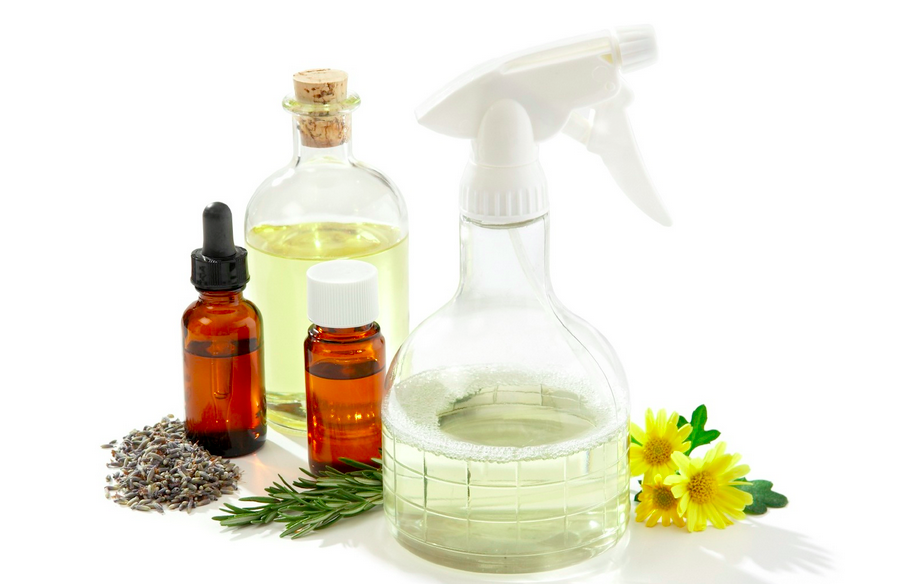
  • DIY! Your cabinets probably already have the ingredients to make much safer, and more environmentally friendly cleaning products. Checkout The Daily Green’s list of Green Cleaning Recipes!
    • Use vinegar to your advantage. It works wonders not only in your food but also as a multipurpose household cleaner. Vinegar works as a glass cleaner, toilet bowl cleaner and stain remover. (Look here on how to prepare the vinegar.) Plus, it’s inexpensive—you can buy it in bulk at the supermarket for cheap.
    • Baking soda is an effective alternative cleaner. On a segment with the TODAY show, environmentalist Deridre Imus recommended practical green cleaning solutions, one of which was to sprinkle one’s carpeting with baking soda to prevent mold and curb bacteria growth.
    • Lemon juice battles tough stains. Use lemon juice to clean off tough water stains on your shower doors and chrome. You can also scrub your pots and pans with lemon for a nice, green clean.

If you are unsure about the “greenness” of your cleaning products, visit EWG’s Guide to Healthy Cleaning Products.

Healthy Child Healthy World: The Nonprofit Every Health-Conscious Parent Should Know


Screen Shot 2013-11-05 at 1.42.32 PM

We created Nine Naturals to empower moms and moms-to-be in their consumer choices. Central to our mission is not only to create amazing beauty products that you’ll love, but also to provide you with educational tools to make it easier to create a safer environment for you and your family.

That’s why Nine Naturals is a proud supporter of the non-profit, Healthy Child Healthy World.

Healthy Child Healthy World’s vision is a world where every child has the opportunity to grow up in a healthy and safe environment. By working with manufacturers and supporting policy initiatives, Healthy Child Healthy World provides access to critical information that encourages smarter lifestyle choices that reduce chemical exposure in homes and communities. Since our own launch, Nine Naturals has partnered with Healthy Child; we support and are grateful for their tireless work to create a healthy environment for children.

Why they do it.

James and Nancy Chuda launched Health Child Healthy World in honor of their daughter Colette, who was diagnosed with a rare, non-hereditary cancer at the young age of four years old and eventually passed away from the disease. Through their research they learned that a possible cause of their daughter’s cancer was maternal exposure to chemical pesticides. Healthy Child Healthy World celebrates Colette’s memory and helps to prevent other children from suffering the effects of unnecessary chemical exposure.

How they do it.

Healthy Child focuses on three channels to execute on their mission:

Empowering Parents

Healthy Child’s website provides practical ways to reduce chemical exposure in your home. They have developed an “Easy Steps” series to guide parents in finding safe baby formula, improving indoor air quality, and using environment-healthy alternatives to dry cleaning.

The nonprofit also assembles inspiring Moms on a Mission and Parent Ambassadors, arguably just as important as Healthy Child’s science gurus in spreading awareness on chemical safety and environmental concern. Celebrity supporters like Laila Ali and Molly Sims proudly support Healthy Child’s causes as well.

Influencing Policy

For over 20 years, Healthy Child has worked to influence policy that better protects our children’s health. Healthy Child partners with manufacturers and policymakers to shed light on issues like corporate accountability, legal and regulatory reform, and greater chemical and product safety.

Promoting Solutions

Healthy Child helps to identify safer alternatives to toxic products, work with responsible companies to create and promote those alternatives and pressure industry giants to follow suit. Nine Naturals is proud to be a Shop Healthy partner of Healthy Child Healthy World. Our haircare and skincare line prioritizes chemical-free safety above all, a flagship shared with Healthy Child Healthy World.

Watch Healthy Child’s “Wake-Up Story” below and check out Healthy Child’s page today.


Things We’ve Read – Week of October 27th

2013-10-30-bealsleadscharge

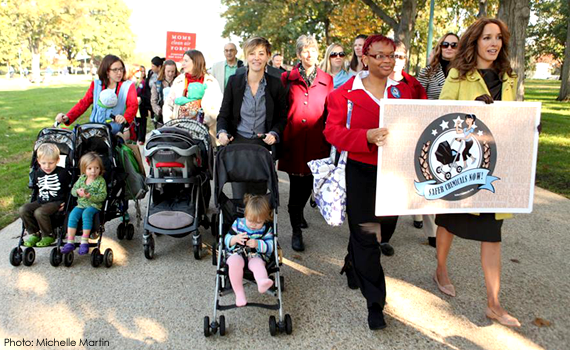
Jennifer Beals Leads Stroller Brigade for Safer Chemicals at U.S. Capitol (Huffington Post): The “Stroller Brigade’s” parent activists hit Capitol Hill to ask Congress for leadership on meaningful laws on toxic chemicals.

Dirty Dozen List of Endocrine Disruptors (Environmental Working Group): The Environmental Working Group just released a list of the top 12 hormone altering chemicals and how to avoid them.

The Best Board Books (Baby Center): Great reading list for your newborn!

Babies Can Learn Music in the Womb (NYTimes): Finnish researchers test expose babies to music in the womb and they recognize it at birth and at 4 months old.

She’s Expecting, but When? (WSJ): Clearblue Advanced Pregnancy Test is 93% accurate in estimating how long since ovulation.


How to Read a Label? Standards, Labeling, Honesty & Deception on Product Labels

Screen Shot 2013-10-16 at 4.17.13 PM

Water. That’s the one word you probably recognize on a beauty label. The rest of the ingredients in beauty and cosmetic products, including even the natural ones, have complicated names – scientific names that are long, unwieldy and barely decipherable in pronunciation or meaning. This can be a unsettling problem, especially as a pregnant woman or new mom who wants to be careful of the ingredients she uses on her skin.

The very complicated task of reading a label is a direct effect of the INCI’s (International Nomenclature of Cosmetic Ingredients) standards for cosmetic products worldwide, which specifies what and how certain information must be conveyed to the consumer through cosmetic labels. Although the wording can be challenging, INCI’s system provides a consistency that ultimately helps the consumer:

  • Ingredients must be listed by weight, from the greatest to the least amount inside the bottle.
  • Manufacturers’ ingredients must fit into 1 of 35 INCI categories, such as emulsifiers, deodorants, and preservatives, simplifying the consumer’s process of identifying and evaluating product and their ingredients.
  • Labels must list the INCI (basically, universal) name for a product. For example, Vitamin E must be represented as Tocopherol.

Providing additional support to the consumer, the FDA also regulates cosmetic product labeling in the US via its thorough Cosmetic Labeling Manual. Their Labeling Claims site lets consumers pursue action against products that have been “misbranded,” or improperly labeled.

Important to note: These standards for labeling should not be confused with cosmetic product regulation. In spite of the many chemicals that appear in cosmetics, the FDA has limited regulations around the ingredients NOT pre-approve labeling before a product reaches consumers. The FDA does NOT strictly regulate the cosmetics industry in the way it regulates the drug industry.

This is one of the many reasons it is so important to know how to read your product labels.

Here are a few deceptive words on product labeling:

Fragrance: Manufacturers are not required to disclose the ingredients of fragrances, as this information is legally considered a trade secret (which companies are granted the right to protect). This is particularly dangerous, because fragrances abound with synthetic chemical compounds, such as allergens, phthalates, and neurotoxins. To guard against this, seek out brands like Nine Naturals that use only plant-based essential oils for fragrance and fully disclose the ingredients in those fragrances.

Natural: This is a marketing word - not a scientific label. The FDA requires only one natural ingredient to be present for an entire product to be labeled “natural.” This means that a company can include one natural ingredient amongst multiple harmful chemical ingredients and still call the product natural. How to protect yourself? Spend time studying ingredient listings on products.

USDA Certified Organic: Product labels that feature this term are manufactured by operators who comply with annual inspections, as well as random checks, to ensure their adherence to USDA’s organic standards; this includes, among many things, a three-year process to properly fortify the farmland. It’s also important to note that many farmers that do adhere to “organic” standards cannot afford the fee to apply the “organic” label to their products.

Here are a few permutations of the USDA’s “organic” label:

    • 100 percent organic: Product must contain (excluding water and salt) only organically produced ingredients. Products may display the USDA Organic Seal and must display the certifying agent’s name and address.
    • Organic: Product must contain at least 95 percent organically produced ingredients (excluding water and salt). Remaining product ingredients must consist of nonagricultural substances approved on the National List or non-organically produced agricultural products that are not commercially available in organic form, also on the National List. Products may display the USDA Organic Seal and must display the certifying agent’s name and address.
    • Made with more organic ingredients: Products contain at least 70 percent organic ingredients and product label can list up to three of the organic ingredients or “food” groups on the principal display panel. For example, body lotion made with at least 70 percent organic ingredients (excluding water and salt) and only organic herbs may be labeled either “body lotion made with organic lavender, rosemary, and chamomile,” or “body lotion made with organic herbs.” Products may not display the USDA Organic Seal and must display the certifying agent’s name and address.

Nine Naturals believes that intentionally vague labeling isn’t fair to consumers, nor is it a healthy or sustainable way of marketing and talking about our products. All of our products’ ingredients are 100% naturally derived and plant-based. Though we’d like the labeling to reflect this simple and important company standard, we are required to include the lengthy INCI name of each ingredient on our product packaging.

Nine Naturals also provides an Ingredient Glossary, which clearly defines each ingredient we use and its beauty benefits to you so that you can understand exactly what goes into our products and onto your hair and body.

What frustrates you about product labeling? How do you shop for cosmetics and beauty products while avoiding the ingredients you dislike?