Expert Interviews

  • The Truth About Your Due Date

    6 birth experts weigh in on the importance of your “due date.”

    Article & Photo courtesy of Well Rounded NY

    When I got my first ultrasound, my doctor measured the peanut-shaped embryo growing inside of me and managed to gift me with the sweet, sweet sound of my baby’s heartbeat. I was five weeks along, maybe six, she said. After I told her the first day of my last period, she confirmed that I was in fact six weeks pregnant. I told her my menstrual cycles were much longer than the 28-day average and wondered if that fact changed anything. But her mind was set: my baby was to be born on October 29, 2014.

    My pregnancy, as a nurse later told me, was “boring” — I was a healthy 29-year old woman; I didn’t have gestational diabetes; and my blood pressure remained steadily normal throughout the pregnancy. There was no reason to believe that I would need to fight for a chance to give birth naturally.

    Yet a week before the big day, my doctor informed me that my cervix was not thinning. I was apparently nowhere close to going into labor, and I should schedule an induction to deliver on my due date. Why the rush, I asked? My son’s predicted birth day seemed to be more of an educated guess, and a pregnancy is usually considered late at the 41-week mark. In fact, many doctors are willing to wait until the 42nd week to perform an induction. My OBGYN, on the other hand, regurgitated all the scary science she knew on stillbirths, C-sections and late labors. According to her, I was not an at-risk patient, but I could become one by holding on to the idea of a natural birth. That day (and again on my due date), I did not schedule an induction, and my son was born on November 1, 2014 — three days ‘late.’

    As it turned out, my son’s tardiness wasn’t the exception, but the rule. Only 5 percent of women deliver on their actual due date, and doctors do recognize that due dates are anything but predictable. So why was I being forced into labor a week before the big day? What did my son and I really risk by waiting it out? And if due dates offer no guarantee, what do they really stand for? To help prepare for your baby’s big debut, we’ve asked the pros to give us their views on due dates. Here’s what they said:

    The Midwife
    Lauren Abrams, CNM, MSN — Clinical Director of Midwifery at Mount Sinai Hospital
    “One of the most important things the midwife or doctor does at the first prenatal visit is to establish the due date. Having an accurate due date is crucial, because it allows us to offer prenatal tests at the appropriate time in pregnancy, and it tells us the safest time for the woman to give birth. Many of the tests we do during pregnancy need to be done during a specific time frame, so if the due date is not correct, the results of these tests may not be accurate.

    In terms of labor, we know that a pregnancy is considered full term any time between 37 and 42 weeks after the first day of the last menstrual period, so this is the safest time period in which to give birth. For women who are having uncomplicated pregnancies, it’s always best to wait for labor to start on its own. Sometimes women ask us to induce the labor before the due date, because they are tired and uncomfortable, or wish to give birth on a certain date; however, for women who are having uncomplicated pregnancies, waiting for labor to start on its own is best, because it gives the woman the best chance of having an uncomplicated vaginal birth and a healthy baby. If labor has not started by 42 weeks, though, we will recommend induction, as we know that babies born after 42 weeks have a higher rate of complications.”

    The Doula
    Lindsey Bliss — Carriage House Birth Director & Birth Doula

    “Due dates are only based on an averages. I wish we could all call it the due month instead. Two weeks before or after the due date is still considered term. I don’t know about you but I am not average, nor have I ever fallen within an average range for anything in my life. I’m on my sixth baby & not one of them came on their due date. There is this extreme pressure from our society for women to have delivered before or on their due date. This is such an unrealistic expectation. I can’t tell you how many unnecessary inductions are performed just because women are considered “LATE” when they go past 40 weeks. In a healthy pregnancy, I truly believe that labor will start when the baby is ready. I believe in our bodies innate wisdom to give birth.”

    The OB/GYN
    Cara Dolin, MD — OB/GYN, Maternal-Fetal Medicine Fellow at NYU Langone Medical Center
    “The due date is very important. It tells me how far along my patient is, what developmental milestones I expect to see on the ultrasound, what tests to perform and how to counsel patients. Many management decisions about the pregnancy are made based on the due date, this becomes especially important as a woman’s due date comes and goes with no sign of labor. There are risks to letting a pregnancy continue beyond the 40th week, including having a very large baby, needing forceps, a vacuum or cesarean delivery and even stillbirth. Because of these risks to both mother and baby, it is recommended that labor be induced before 43 weeks. Many providers will induce labor at 41 weeks. Ultimately, the decision to be induced is made between a woman and her physician or midwife based on the specific circumstances of her pregnancy.”

    The Labor Nurse
    Jeanne Faulkner — registered nurse and author of Common Sense Pregnancy
    “The medical community has quit putting so much emphasis on delivering by the due date. That’s because too many inductions fail to lead to vaginal births and too many women end up with c-sections. Too many babies thought to be due or near due, are being delivered just a wee bit too early and ending up in the NICU with breathing problems. We know there’s a lot of finish work to be completed before a baby is ready to leave the womb and live life independently from its mother. We shouldn’t shortchange babies by unnecessarily delivering them early. Even the American Congress of Obstetricians and Gynecologists agrees that mothers and babies know best (most of the time, anyway) about when baby should be born. Their most recent guidelines discourage doctors and mothers from scheduling inductions solely for due-date related reasons. If a healthy woman with a normal pregnancy is pressured by her doctor or midwife to have an induction or scheduled c-section, she should ask for more information. She needs to understand why her pregnancy or health falls under ACOG’s guidelines for appropriate induction. If she’s fine and her baby’s fine, then it’s probably also fine for labor to start on its own.”

    The Acupuncturist
    Aimee Raupp — Wellness & fertility expert, acupuncturist
    “To me, due dates are approximations. They are calculated based on the first day of the last menstrual period, which is roughly two weeks before a woman ovulates and can even get pregnant. Plus, it can take from 2 to 9 days for the fertilized embryo to implant in the uterine wall. So I encourage my patients to think of their due date as a guesstimate. I remind them that babies come when they are ready: they can come early on their own, and they can come later than expected, which is often the case for first time pregnancies. If babies aren’t budging, there could be a reason that requires our patience and/or further medical intervention.

    Acupuncture can really get the labor process going, and many women who are nearing or past their due date often come to me (or are referred to me by their doctors). From my experience, acupuncture usually works within one or two visits. When it doesn’t, I believe it means that baby just isn’t ready to come out.

    Let’s not forget, too, that the very definition of a ‘full-term’ pregnancy varies from one country to the next. Here, ‘full term’ is technically 40 weeks and 6 days; in some European countries, ‘full term’ is now 41 weeks and 6 days. But I think that as long as there are no medical reasons — like high blood pressure, swelling, fever, low amniotic fluid, etc — and the woman is still comfortable, it is ok to go past the ‘full term’ mark. When and if the time comes, I rely on signs of early labor, like the baby’s low positioning and contractions, to do some treatment and encourage the progression of labor — but only once the woman hits 40 weeks, not before.”

    The Pediatrician
    Mona Amin, DO — pediatrician at Tribeca Pediatrics
    “A due date does give us a lot of information about what to expect with a baby, especially if he or she is premature (born prior to 37 weeks). We always like to know if the baby ended up needing any support at delivery (i.e. oxygen support, antibiotics, or a stay in the NICU). And when seeing a family for their baby’s initial visit, knowing gestational age, along with any complications during pregnancy, gives us, pediatricians, an idea of the baby’s transition into the world and of the health outcomes to closely follow.

    For those born post-term (after 40+ weeks), health outcomes are standard to those born term. Some findings with post-term babies include large babies (which can make vaginal deliveries more difficult and require close monitoring of sugar levels), as well as dry flaky skin from being in a water-like environment in mom for so long. The most important thing for these children is to have regular OB exams and fetal monitoring — to make sure that they continue to receive adequate nutrition and perfusion from the placenta.

    Premature babies (especially those born before 32 weeks) can have many of their vital organs affected, as they are not fully developed. So they do require much more visits to their pediatrician and coordination with specialists. They are closely monitored for their breathing, nutrition and heat regulation. We understand that if you have a premature child, you will have many questions and concerns — and rest assure your NICU doctors and pediatrician are ready and willing to walk you through what to expect.”

    This article is by Charlene Petitjean-Barkulis, courtesy of Well Rounded NY. Conceived with love by former magazine editors Jessica Pallay and Kaity Velez, Well Rounded NY aims to be the singular pregnancy resource for city-savvy moms-to-be. Through reviews, profiles, expert Q&As, local guides and more, Well Rounded curates the New York City pregnancy and helps its readers come to terms – and term! – with pregnancy in the city.

    RELATED POSTS
  • healthy mama Founder Rachel Katz-Galatt on Baby #2 and Pregnancy-Safe Remedies

    healthy mama® is the first brand to offer pregnant and nursing mamas a complete line of safe* and effective wellness solutions for those times when mamas feel a little less than “glowing.” The entire healthy mama® line has been created in partnership with major health organizations, OB/GYNs and nutritionists to ensure it contains the highest quality, safest* and most effective solutions for all of mama’s common pregnancy and nursing needs.

    How was Healthy Mama conceived and how has it been received by mamas-to-be?

    I founded healthy mama® out of my own real life experience of being confused and frustrated when trying to find a safe remedy to help alleviate my dreaded constipation during my first pregnancy. Feeling particularly uncomfortable one night, my husband David and I paid a visit to my local pharmacy in search of an over the counter remedy, but with the aisles full of pills and potions, I wasn’t sure what was safe to take and neither was the pharmacist. Needing to ‘get things moving’, I unknowingly selected a remedy that I later learned was deemed unsafe for use during pregnancy and was in fact, cited to cause uterine contractions. Sometime shortly thereafter, I delivered my oldest daughter, Mia, at just 24 weeks! I spent the next five months watching Mia fight for her life in the NICU. It was there that I made a commitment to help other women avoid the same plight.

    How many pregnancy concerns addressed by Healthy Mama did you experience during your own pregnancies? Which existing Healthy Mama products do you most wish you had back then?

    The most disruptive concern I had was constipation--I had never had that ailment before and it was quite uncomfortable. If you ever get into such a bind (pun intended), you will know that Move it Along! Constipation Relief is the safest product to take during pregnancy to alleviate your ailment effectively. Boost it Up! Protein Energy Drink contains 3g of fiber to avoid constipation too. Be Well Rounded! Prenatal Vitamin and DHA supplements have a special non-constipating iron, a mineral pregnant women need but many don’t take due to side effects. I wish I had these 3 products mentioned to safely avoid and remedy constipation with peace of mind during my pregnancy!

    What was the biggest difference between your first and second pregnancy?

    We tried so hard to get pregnant the first time around. My second pregnancy was actually not planned... we had just come home from being in the hospital with my first child and recovering from a very traumatic event when we discovered we were pregnant. We were shocked and nervous but also so excited!

    Do you have any advice for those of us that may be thinking about having #2?

    You are a bit more knowledgeable and experienced the second time around… there are always new products available and more convenient ways to do things, but you have more control of the situation. It’s a bit more laid back. Enjoy the ride. Ensure your body is prepared to be a host for the little munchkin by maintaining a healthy weight and taking prenatal vitamins with folic acid at least 3 months prior to conception.

    How do you balance being a mother-of-two and CEO/Founder of a such a fast-growing and successful brand?

    Not easily quite honestly. I like to do everything at 100% and that’s just not possible. I try to prioritize and get all my work complete during work hours so that I can get home to spend time with my two beautiful girls in the evening. I am blessed to have an extremely supportive husband who takes on additional responsibility when necessary. He gets up in the morning to make them breakfast and get them dressed for school and helps them brush their teeth and put them to bed at night when I am away on a business trip or need to spend extra hours at the office. Everyone has different measures of success--I wouldn’t be successful in life if I let them grow up without me being there, even if I had the most successful business.

    We love what Healthy Mama has come up with thus far. What's next for the company?

    We have some really exciting products on the horizon! We are about to launch an amazing product to help alleviate one of the most uncomfortable symptoms, morning sickness. Nip the Nausea! organic morning sickness capsules contain organic ginger and vitamin B6 which are clinically proven ingredients to help eliminate the need to pray to the porcelain god. It will be launching on healthymamabrand.com February 1st and at select GNC stores March 22nd.

    RELATED POSTS

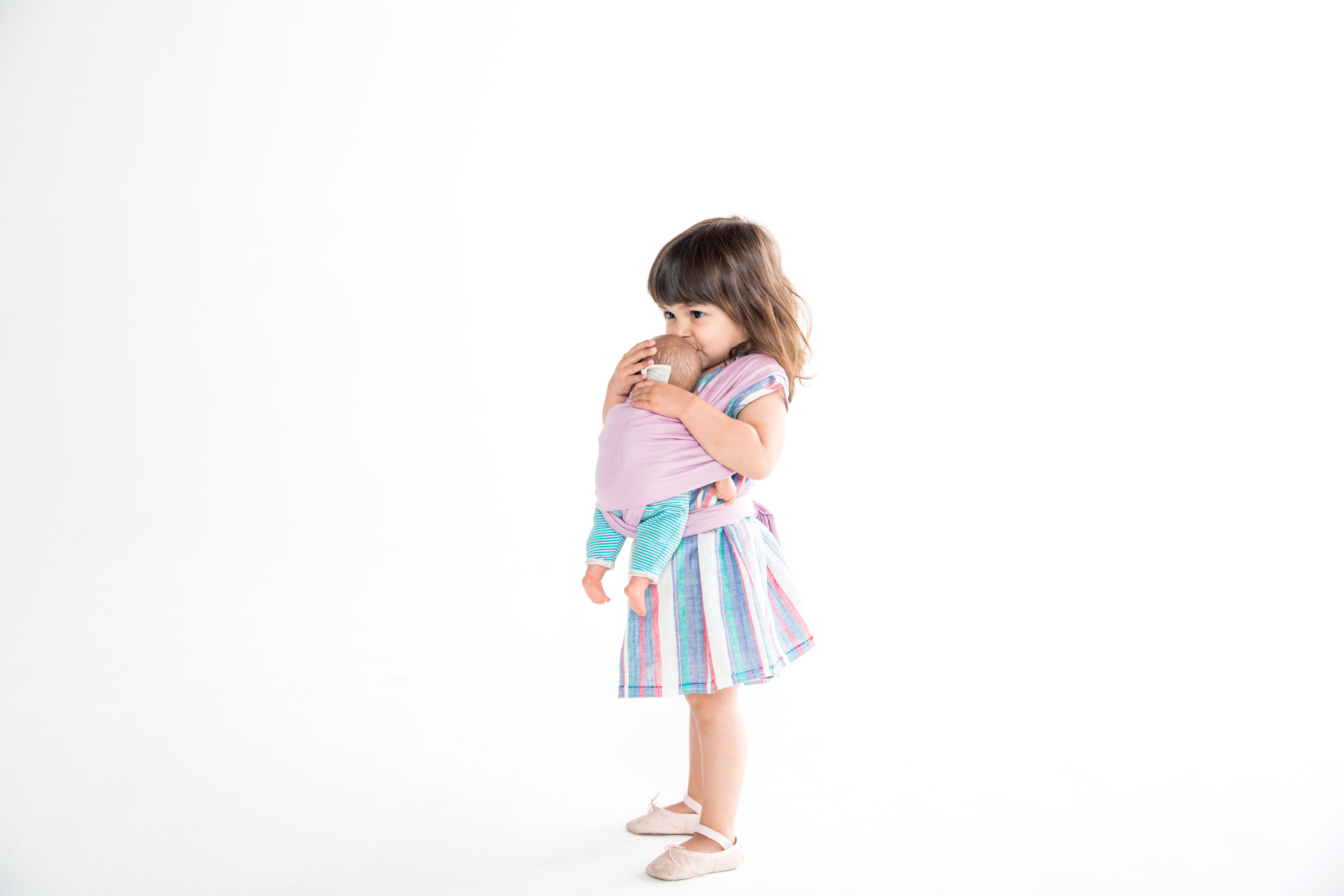
  • Babywearing 101

    Taking the guesswork out of babywearing with an expert and educator.

    Article & Photo courtesy of Well Rounded NY

    While we’re huge fans of babywearing thanks to its countless benefits for baby and mama, we also know that it can be easier said than done. For many a first-time mama, a carrier can be confusing and complicated–throw in a crying baby during that first try, and well, there just might not be a second.

    But don’t give up, mama! Just like birth and breastfeeding, babywearing is much easier when you’ve got a little knowledge going into the process. So to help get you ready for your own babywearing journey, we asked Sarah Longwell-Stevens, babywearing educator and owner of Small Things NYC , to answer some of the most common babywearing questions out there.

    When can you start babywearing? Is there a required weight or age?
    From birth! Generally if the doctors cleared the baby to come home from the hospital, they are usually fine to put in a carrier. Most carriers have a lower weight limit of 7 lbs. That is the lowest limit most manufacturers will allow. While I think some fabric carriers are probably still safe for a smaller baby because they get custom fit as they are put on, I would definitely respect that limit if you are learning. Also, you want to give yourself some time to recover from pregnancy and birth. Generally, if you are able to hold your baby’s weight, you are able to wear them. Babywearing is a physical skill though and just like some people need a little hands-on breastfeeding, getting some help in how to use your carrier can make a world of difference.

    When can you babywear until?
    Until you can’t or don’t want to carry them anymore! That will be a different age for everyone depending on their needs for it. Most families wear their babies anywhere between 3 months to 3 years, but all families are different! Three years sounds big and heavy but you build the strength gradually as you go. Plus you don’t need to go to the gym! There are carriers for preschoolers and older that are fantastic for families with children in wheelchairs.

    How do you know if baby is breathing?
    You can feel it! The nice thing about babywearing is the baby is right there and we pretty naturally lay our hands on their bodies. The rise and fall of their chest is easy to feel. To ensure a clear airway in any device you put your baby in just make sure their chin isn’t laying on their chest–you want to be able to get a finger or two in between.

    What’s the most ergonomic positioning, no matter what carrier you are wearing?
    We like to see babies supported in the same way we would naturally hold them upright in our arms. High enough to kiss the top of their head, a finger between their chin and chest, and their knees a little higher than their bottom in a squat position. Ideally the fabric of the carrier will reach from the back of one knee to another. This helps to support the baby in the squat and makes carrying them much more comfortable for the parent. Just changing that one thing can make a baby feel 10 pounds lighter!

    How do you know if you’re doing it right?
    I always like to do a head to toe check for the positioning elements above when they are first put in the carrier. But another good question is: “Do I feel comfortable being hands free?” Usually when I see babies poorly positioned in a carrier, I see the parents holding them around the carrier supporting their body in a more ideal position. If you don’t feel hands-free, get some help adjusting the carrier. Even if you feel like the baby is secure if they are in the carrier in a way you would never hold them in your arms (like down by your hip), then don’t do it. The carrier should feel like holding.

    Any babywearing no-nos?
    Babywearing and most sports are not compatible—horseback riding, biking, skiing, rock climbing and so on. If you wouldn’t feel safe doing it while holding them in your arms, I wouldn’t do it. Be careful with hot liquids and cooking, both are probably safer with a baby on your back if at all. Babywearing in cabs is particularly dangerous because you feel like they are secure but in an accident their weight will exceed the upper weight limit of the carrier several times over. You also don’t want to experience whiplash with your baby’s head right under your chin.

    Can you babywear part time?
    People have been using a wide variety of carriers to care for babies for thousands of years in every nook and cranny of the planet. It is a way to get things done and a great tool to have at your disposal. Like all tools, you might find you have more use for it than others and it will be more suited to certain situations. Not all babies need or want to be held all the time.

    Can anyone babywear your baby? Does it provide the same benefits for Dad, Grandma or caregiver?
    Absolutely! Babywearing can be a great way for anyone to form a close bond with your baby. In many cultures, babies are passed around and everyone wears them. We tend to have smaller, more nuclear families, but there are still great benefits to other people wearing your baby. It is a really great tool for anyone who might care for your baby as it can still have that same centering effect and can help a baby adjust to new caregiving environments.

    Can you babywear twins?
    Yes! I recommend that you get comfortable wearing one baby in a carrier at a time first, but it is totally possible to wear both babies at the same time. You want to really be aware of each baby individually and feel comfortable with how your carrier works first. I prefer using one carrier per baby so that when possible you can share the load with a partner. It is a more flexible arrangement than a carrier that only carries two. Find a carrier you like, learn how to use it, and when you feel ready get some help on how to wear both.

    Is it safe to breastfeed while babywearing?
    Yes! Especially in the city, babywearing can be a lifesaver if you need to feed your baby in an awkward time or place. It can be especially amazing for second time mamas who are trying to keep up with the activity of an older child. It is another advanced skill and one that gets way easier after about three months. You want to get comfortable breastfeeding and comfortable using the carrier separately before you start trying to put the two skills together.

    How do you choose the right carrier for your baby and lifestyle?
    I really recommend trying them on with your baby or with some weight in them. I bring weighted dolls to people so they can feel what a baby will feel like if they haven’t had their baby yet, or they are feeling nervous about using their real baby right off the bat. It is so hard to get a feel for what you will like without trying it first. Buying a carrier is really a lot like buying jeans–they all do the same thing but everyone has their preferences in terms of the very small details.

    This article is by Jessica Pallay, courtesy of Well Rounded NY. Conceived with love by former magazine editors Jessica Pallay and Kaity Velez, Well Rounded NY aims to be the singular pregnancy resource for city-savvy moms-to-be. Through reviews, profiles, expert Q&As, local guides and more, Well Rounded curates the New York City pregnancy and helps its readers come to terms – and term! – with pregnancy in the city.

    RELATED POSTS
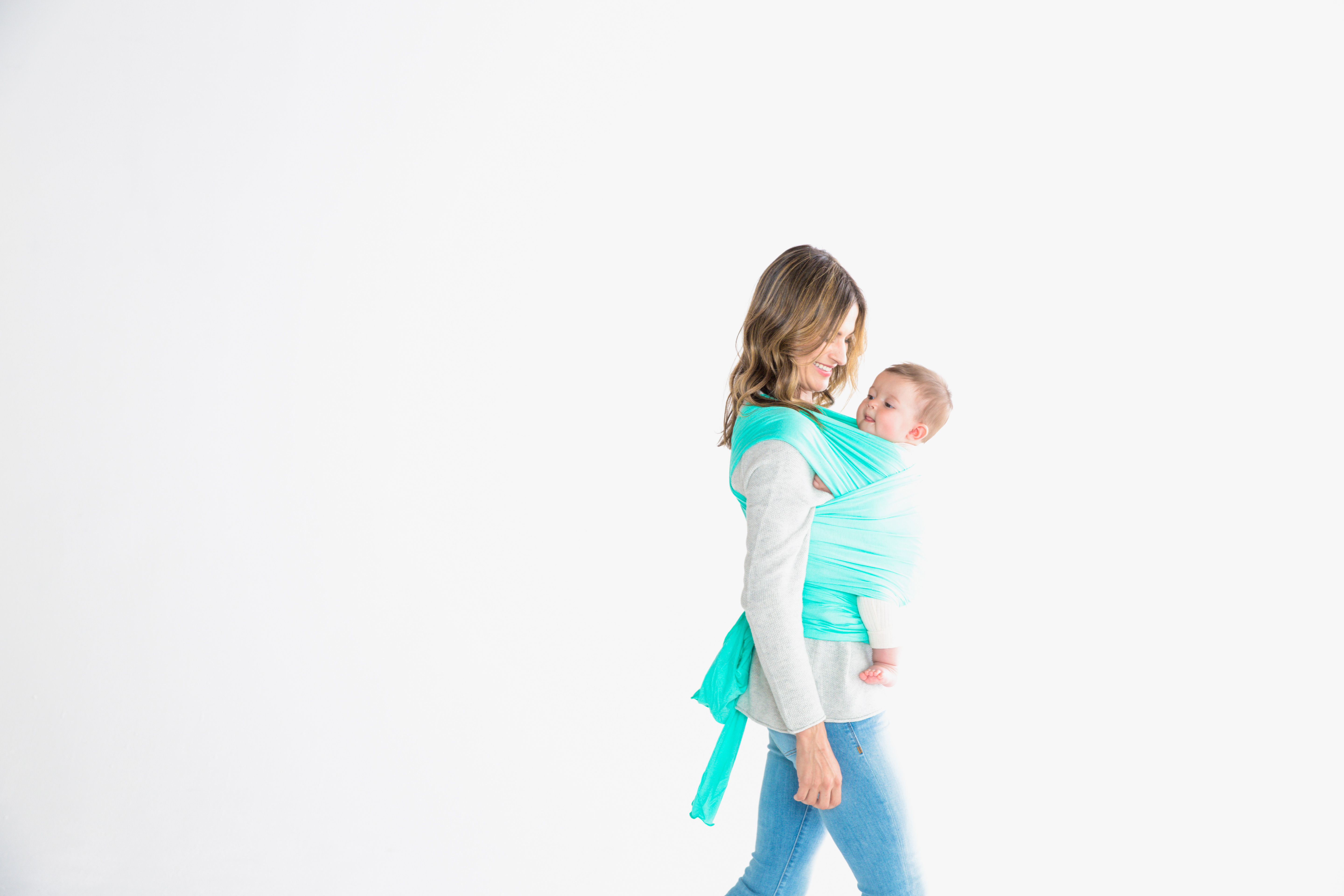
  • Wrap-Star: Elle Rowley

    Solly Baby’s founder offers 5 tips on balancing business and motherhood, and shows off some brand new Solly looks.

    Article & Photos courtesy of Well Rounded NY

    It’s no secret that motherhood gets the creative juices flowing. Once we’ve grown a human being, brought them into the world, and then supported their little life day after day, it feels like there’s nothing we can’t do, right? Which means, of course, some of the best ideas are born right after baby. As was the case with Elle Rowley’s Solly Baby.

    An avid babywearer seeking a better carrier right after she had baby #2, Elle worked relentlessly in a nook of her living room while her little ones slept. Her design and experimentation ultimately paid off with a soft, luxurious womb-like knit wrap so light and slim that it literally molds to your baby without overheating. Add in custom-dyed fabrics in beautiful colors and gorgeous designs (shibori anyone?), and it’s no surprise Solly Baby wraps have become the centerpiece of just about all our favorite new mama Instagram feeds.

    This week, Solly Baby debuted their latest collection, filled with fresh hues, updated patterns and even a ridiculously cool Limited Edition Oh Joy! wrap by design guru Joy Cho. Below, Elle–now a mom of three (Lucy, 6; Solomon, 3; and Frances, 1)–fills us in on what we can expect to see from Solly Baby in 2015, and shares a little advice on balancing babies with business and getting your own creative juices flowing.

    Solly Baby Teal

    How do you structure your days between work and family?
    During a typical week, I’ll go to the gym and then into the office early while my husband Jared gets kids ready, my oldest off to school and my youngest down for her nap until 10 or 11. Then we swap. I go home to our little ones for the rest of the day while Jared works until 5 or 6 at the office. I check in on emails and our social media platforms periodically but I really try to stay present with my kids when I’m out of the office. When they’re in bed we’ll both work a little more if it’s an especially hectic time.

    The growth of our business has been incredible, but the workload can be relentless at times. Still, I love that there is flexibility within the chaos.

    How do you think becoming a mom has enhanced you as a business woman?
    I don’t just want to succeed, I want to succeed in a way that I am proud of in every way. In a way that my kids will want to emulate and feel proud that I’m their mom. I see every minute that I’m away from them as time that needs to mean something, not just make money, so I want everything I do and all of my interactions to really mean something.

    Who are some entrepreneurial moms you admire or want to emulate?
    Oh my, I feel so lucky to be surrounded by so many, but some of my closest “mentors” are DeNai Jones and Korie Conant (founders of Petunia Picklebottom), Katie Richardson (Puj), Annalisa Thomas (Oilo). It’s been amazing to see these women grow these beautiful companies and still keep their priorities straight.

    I’m equally inspired by the mothers of start-ups around me. I see them do the daily grind for little to no pay, no accolades and questioning themselves daily if it’s worth it, if they shouldn’t just give up. That’s the time when every day is such a struggle to just keep going. There’s something so amazing about watching that kind of willpower and determination.

    Solly Dolly Wrap

    What advice would you give to a new mom that’s trying to start or grow a business?
    Three things! First, only work with people who are either hungry for the work or understand your vision (preferably both). Second, have such a clear vision of what you want that no one else can take it from you. And, finally, for my deepest thought: you know how on the Bachelor the girls who get so bugged with each other start obsessing over it and end up getting kicked off because amidst their angst they forgot to develop a relationship with the Bachelor? That’s what knock-off competitors can do to you. Keep focused and leave it to karma.

    Is there such a thing as balance? What’s your best tips to help achieve it?
    If there is, I haven’t found it! I think there is such a thing as priorities, though. I think we all know when our priorities are out of whack and when they’re not. I definitely don’t want to speak from a position of authority on this, but I can share a few things I’m working on:

    1. Take care of yourself first so you can best take care of others.
    2. Don’t be a martyr! No need to suffer needlessly in an attempt to “do it all”. Nobody can do it all. Let’s accept this and let go of the guilt behind things like scheduling in a date by yourself once a month (or more!), hiring a sitter or a housecleaner, going out with your friends, or not making your daughter’s birthday cake from scratch.
    3. When I’m feeling stressed, I like to make a list of everything I can possibly think of that’s making me feel that way. Then I write next to each stressor what I can do to change it. Either there’s something I can do and I’ll plan and schedule what I can do right then or I let it go.
    4. Learn to say no.
    5. Be present.

    Oh Joy! for Solly Baby

    What’s upcoming for Solly Baby in 2015?
    This wrap with Oh Joy! is the first of many exciting things this year. We have our Solly Dolly wraps for little ones to wear their favorite dolls or stuffed animals in and a host of other collaborations this year as well. We are always looking for ways to work with our partner charity, Every Mother Counts, so be on the lookout for some projects with them later this year, celebrating motherhood and improving maternal health globally.

    This article is by Jessica Pallay, courtesy of Well Rounded NY. Conceived with love by former magazine editors Jessica Pallay and Kaity Velez, Well Rounded NY aims to be the singular pregnancy resource for city-savvy moms-to-be. Through reviews, profiles, expert Q&As, local guides and more, Well Rounded curates the New York City pregnancy and helps its readers come to terms – and term! – with pregnancy in the city.

  • Fashion Find: Mitera Collection

    A chic collection of nursing dresses to ensure you have one less obstacle postpartum.

    Mitera Collection


    Article & Photos courtesy of Well Rounded NY

    When Yoko Shimada gave birth to her son Hugo in 2010, she was in a state of euphoria as many of us new moms are. But, “there is another side of motherhood that no words can describe,” she remembers. “Nobody really tells you how truly challenging it can be. Sleeplessness, hormone-induced sweating, post-pregnancy excess weight and saggy stomach, postpartum hair loss, lack of time for any form of self-care like showering, putting on decent clothes and exercising.” Sound familiar?

    She struggled with breastfeeding, and when that got easier, she struggled with breastfeeding in public. And then she struggled with pumping when she went back to work as a global public health exec. She had to look professional, but also needed easy access to her breasts for pumping. Dresses were impossible. “I had to completely undress, or at the very least, undress from the waist up (if there was a zipper in the back) in order to pump. If someone were to walk in the door while I was pumping, I would look completely naked.”

    And so she dreamed up Mitera Collection, a beautiful, functional and practical line of versatile nursing- and pumping-friendly dresses. Three years and one more baby (Emmeline) later, it came to life. The inaugural collection launched this spring and includes 6 styles that range from casual to professional to party. It reflects the sensibility of an urban mom, who Shimada says, “is not just a mom, but a woman who wears many different hats.” Mitera is also committed to newborn and maternal health; a percentage of revenue will support organizations working in that space.

    Below, Shimada talks about the journey to launch Mitera, and how it’s helping solve at least one challenge we all face postpartum: what to wear.

    Mitera Collection dress

    Tell us about your own breastfeeding experience.
    Society expects and everything in the media tells you that you are supposed to be HAPPY to be a mom. But having done it twice now, it is not that simple. I admit that the first three to four months into my postpartum period was both the happiest and hardest time of my life. As a global health professional who specialized in maternal and child health, I knew the benefits of breastfeeding and I spent my career educating women in different parts of the world about the importance of breastfeeding and its benefits for both the baby and mom. But when it was my turn, I realized how hard it actually was. My nipples cracked and bled and they hurt for a good month and a half (with both kids!). Constant breastfeeding sessions every few hours = no sleep, no rest. Pumping sucked. Period. But after persevering through a few problems for the next two months, I was successfully breastfeeding and came to really enjoy it.

    How did that experience plant the seed for Mitera?
    Just when I had gotten used to the breastfeeding process, I encountered another problem – breastfeeding in public. On top of already feeling unattractive, I could not really wear clothes that made me feel somewhat normal. Instead, I was wearing ‘nursing’ friendly clothes where I could easily and ‘discreetly’ pop my breasts out for feeding my son or lift a shirt exposing my midriff, the most vulnerable part of my postpartum body to nurse. Both of my babies were extremely unhappy with the nursing cape that they constantly batted away, every time I tried to cover myself. When my son was 3 months old, we took him to Japan (my home country) to introduce him to his extended family. In addition to the stress of traveling internationally with my newborn son, it was also a struggle to feed, pump and store milk at the airport and in the economy seat of an airplane. It was messy and I felt uncomfortable, frustrated and miserable.

    Mom Fashion - Mitera Collection

    What about your back-to-work experience?
    Four and a half months after Hugo was born, I went back to work. The lactation room in our building was located in a dark basement. After trying to pump there a couple of times, I started pumping in my office with a big sign on the door saying “DO NOT ENTER.” I pumped while checking emails. I pumped while eating lunch. I pumped while on conference calls. I pumped all the time.

    This is when I ran into yet another challenge – my wardrobe. Since my days were so busy with no option to stay late, I had to be ultra efficient while accommodating my pumping schedule. My attire had to be in line with the professional look of the World Bank, but also make it easy for me to quickly access my breasts for pumping.

    Out of necessity, I started sketching my ideas out for nursing dresses nice enough to wear to the office. Initially, I never really thought about making them. But, then I realized that I couldn’t find anything in the market that really worked for me. I found a patternmaker in Japan to make the prototypes and had a tiny factory in Kobe produce the first samples of my breastfeeding dresses. I wore them all myself out of necessity and also to test them. It was not long until other moms started noticing them and asking me where I got the dresses. So, I continued working on the design in the evenings after I put my son to bed, while holding down a fulltime job that required constant international travel. It took me another three years and one more baby to decide to develop my idea into a business.

    Tell me about the Mitera aesthetic.
    Contemporary, Sophisticated, Modern, Chic, Urban, Simple, Inspiring and Empowering. I designed all the dresses from the point of view of a woman who is a mother. Our dresses are designed to be first and foremost beautiful and then functional and practical. I want women to feel like they are done the minute they put on our dresses (as moms, we are always short on time, right?). All of our pieces are designed to be versatile – from day to night, brunch to dinner, playdate to cocktail, office to evening, and kids birthday parties to weddings.

    Mitera maternity dress

    How are they functional for breastfeeding and comfortable for postpartum?
    All of our dresses have the patent-pending hidden zipper system which allows for discreet feeding and pumping. Three out of the six dresses have what we call a modesty bra, which is a thin lining or a loose sports bra offering extra protection when the zippers are open. All of our dresses are machine-washable and several come with huge pockets for essential mom items like keys, pacifiers and toy cars. I know how messy mommying can get, so I envisioned those days when I might be nursing a baby while dealing with a toddler covered in Nutella or some other sticky substance! With our timelessly chic design, completely hidden zipper access and practical luxury afforded by details like pockets and washability, our pieces are meant to be worn through pregnancy, nursing and well beyond, through the joys and challenges of motherhood. I wanted to design dresses that women would want to wear even if they are not pregnant or nursing.

    What kind of fabrics do you use?
    We use only high quality durable and washable fabrics made in Japan. This has practical and ethical reasons. We searched high and low for luxurious yet durable and washable materials for our dresses. While it would be nice to wear a silk dress, it is not practical when you have small children and cost of dry cleaning could be prohibitive. I personally source fabrics from Japan and we know where our fabrics are manufactured and feel confident about their quality, as well as traceability.

    Why is wearing a nursing-specific item so important for a breastfeeding mom?
    Most dresses do not allow easy access for discreet breastfeeding. Most of the time actually, wearing a dress as a breastfeeding mom means taking it all off or becoming half-naked if there was a zipper in the back, in order to nurse. It is just not practical. There are great designs like the classic V-neck dresses or crow-neck dresses where you can access your breasts for feeding or pumping, but the problem is that these designs are fairly limited. I wanted to wear dresses to go to the office and needed something that was professional as well as elegant and something that allowed me to easily access my breasts for frequent pumping while I was on a conference call or typing an email. I could certainly not wear a deep V-neck with my protruding lactating boobs (lol!).

    Postpartum fashion - Mitera Collection

    What can we expect in future seasons from Mitera?
    We might be adding fun colors to add to the existing line and our second collection is in the works. We are thinking a jumpsuit, maybe a top and more! We also have plans to design nursing bras and accessories all with the same Mitera aesthetic.

    Tell us more about the mother-to-mother program.
    Because of my background in global public health, I have always been passionate about issues surrounding maternal and child health. When I became a mother myself, these issues became even more personal. Pregnancy and childbirths should be the one of the happiest times of a woman’s life, yet the reality in the most of the developing world is different.

    Each year around the world, 2.9 million newborns needlessly die within their first month and an additional 2.6 are stillborn. One million babies die the same day they are born. Furthermore, approximately 290,000 mothers die from complications related to pregnancy and childbirth. Over 90% of the deaths occur in the developing world, and 90% of them are preventable. While great strides have been made in reducing global child mortality, newborns now account for 44 percent of all childhood deaths. That is why we decided to focus on newborn health.

    With our Mother to Mother program, our intention is to help bring innovation to affect social change – in this case, to improve maternal and newborn health. Our focus is to identify innovators and market disruptors who are working to improve maternal and newborn health and partner with them in our program.

    Our first partner will be D-Rev, a San Francisco based non-profit product development company dedicated to improving access to world class medical technologies for the population living on $4 a day. We chose to partner with them because 1) they focus in particular on newborn health through their device called ‘Brilliance’ to treat neonatal jaundice, 2) they are innovative in how they aim to achieve their goal of radically improving accessibility to health technologies that can save and improve people’s lives, 3) all of their products are designed to scale on the market, not through donations or subsidies, 4) they are committed to transparency which is important to us in terms of showing our customers where our donation goes.

    Mitera white dress

    This article is by Jessica Pallay, courtesy of Well Rounded NY. Conceived with love by former magazine editors Jessica Pallay and Kaity Velez, Well Rounded NY aims to be the singular pregnancy resource for city-savvy moms-to-be. Through reviews, profiles, expert Q&As, local guides and more, Well Rounded curates the New York City pregnancy and helps its readers come to terms – and term! – with pregnancy in the city.

  • Reflections: Pregnant at 40

    Fertility specialist Aimee Raupp opens up about her own journey to conceive.

    Article & Photo courtesy of Well Rounded NY

    Last September, I turned 40. Just a few months prior, I fell in love with an amazing 43-year-old man. The relationship moved fast; we quickly moved in together and started talking about building a family. We both wanted children, and preferably more than one. Since we planned to marry, we questioned whether we should do that first, and then start to create our dream family. But rather than wait, we decided to just go for it.

    We started trying to conceive in October and we agreed to not put too much pressure on it: we would just continue to have fun sex as we were already doing and see what happened. He offered to get his sperm checked and I said, “No. If we’re not pregnant in six months, then we can both get tests done.” I thought about getting my hormone levels checked with my gynecologist, but I put that task on the back burner as well. I just wanted to have sex and not focus on the getting pregnant part. I wanted to hold onto the faith I had in my body and in its ability to do what I believed and hoped it could do—conceive with ease, regardless of the fact that I was now 40 years old.

    In all honesty—I never shared this with my partner—I did expect it to take at least three months, or probably more, to get pregnant. I know how long it can take a couple to conceive when both partners are over the age of 40. I know the increased risks of miscarriage and chromosomal abnormalities with age. I’ve heard about and read all of the same statistics we all hear about: the emotionally draining tests, the roller coaster ride of multiple rounds of IVF or Clomid, the painful shots, the mounting bills and the nights of tears. And, as much as I have always had faith in my body and its ability to conceive, I’d be lying to you if I didn’t say these thoughts weren’t causing me some turmoil.

    In fact, I know the road of fertility challenges better than most because I practice Traditional Chinese Medicine (TCM) and have specialized women’s health and fertility for the 10 years. I have helped hundreds of women on their path to conceiving and giving birth to a healthy child. I have written books and speak publicly on the topic, and I know all of the potential fertility challenges that exist because I have gone through them with my clients. I have witnessed way too many heart-wrenching fertility struggles. But, through my experience, I also know that most all the women I work with do wind up conceiving healthy children at some point–even in their 40s.

    When I work with fertility clients, I guide them to adopt certain lifestyle changes—like becoming omnivores, eating organic, meditating, sleeping 7-8 hours each night and practicing gratitude—to optimize their fertility. Based on my decade of clinical experience and my years of extensive research, I believe that when we practice these lifestyle habits, we truly have the ability to change our health and improve our fertility–even in our 40s.

    I’ve seen clinically how these tweaks in behavior can dramatically shift health in a positive direction. Many women, when they adopt these lifestyle changes, see improvement in their menstrual cycles and their ovulation; their hormonal imbalances balance out; their thyroid comes back into harmony; their lives change for the better; they are happier in the present moment; and, overall they are healthier on a global scale: mind, body and soul. It is then that I see them conceive—when mind, body and soul are in sync.

    So, now it’s my turn to be a testament to what I preach: the way you live your life has an impact on your health and your fertility. And in my clinical opinion, chronological age pales in comparison to biological age.

    As I am writing this, I am 16 weeks pregnant. I got pregnant the second month we tried. Last week, we got the results from my maternity 21 and nuchal translucency tests and they not only showed that the baby boy inside of me is healthy, but also that I have the same genetic odds of anything going wrong with this pregnancy as a women half my age. The doctors have told me there is no need for any further testing. We are in the clear.

    I can’t tell you what a relief that news was. That’s not to say that when I go to the bathroom, I still make sure there’s no blood on the toilet paper or that I randomly catch myself squeezing my breasts (sometimes in public!) to make sure they’re still sore, or when I feel cramping in my low back, I fear I am miscarrying—even though I know it’s just the baby growing. I guess this is just the beginning of being parent and worrying about your child’s well being. It’s absolutely surreal.

    For as many times as I’ve been on the other side of this with one of my clients, nothing compares to now knowing it and living it first hand. It truly is a miracle. And then to know that my odds of having a healthy baby are the same as someone half my age–I feel that is a true testament to all the work I have done on my health over the years. I really believe the way I live my life has reversed my aging process, or at the least slowed down the aging process of my body and its cells.

    I’m living proof that 40 and pregnant happens and it can happen naturally, with ease and fun. I am proud to say that I treat my body like the palace I believe it is, and even though I had—and, will likely continue to have—moments of worry and fear over the health of my baby, I never lost faith in my body and its ability to conceive a healthy child at some point. For all this, I am beyond grateful.

    As I always say in my clinic: you have the power to change your health and improve your fertility. My pregnancy at 40 years old is evidence of that.

    Author, acupuncturist, and herbalist Aimee Raupp is a women’s health and fertility expert. Follow along on her blog for more on her pregnancy journey and check out her latest book, Yes, You Can Get Pregnant: Natural Ways To Improve Your Fertility Now and Into Your 40’s.

    This article is by Aimee Raupp, courtesy of Well Rounded NY. Conceived with love by former magazine editors Jessica Pallay and Kaity Velez, Well Rounded NY aims to be the singular pregnancy resource for city-savvy moms-to-be. Through reviews, profiles, expert Q&As, local guides and more, Well Rounded curates the New York City pregnancy and helps its readers come to terms – and term! – with pregnancy in the city.

  • The Nursing Bra You Need: Interview With Au Lait Founder Emily Hsu

    Finding nursing bras that make breastfeeding easy and don't compromise on comfort can feel impossible to find, but Au Lait has you covered! We sat down with Au Lait founder Emily Hsu and discussed the inspiration behind her line of unique nursing wear. The Au Lait line provides privacy, comfort and support through design and materials that are safe for you and your baby – which is why we’re so excited to have them as our newest addition to The Covet Shop!

    1) What inspired you to start Au Lait?

    I had a really hard time trying to sustain my breastfeeding efforts while traveling for work. I was not comfortable with exposing myself especially while I was on business flights and conferences. Au Lait's styles are made for the nursing mothers on the go, while providing 360 degrees of privacy.

    2) How are your clothes different from other nursingwear brands?

    Au Lait combines timeless style with a focus on fabric and feeding technology so that breastfeeding moms are not restricted to nursing tops that are overly casual.

    3) Tell us more about the nursing bra. How did you design it? Why is it special?

    I suffered from repeated bouts of mastitis while I was breastfeeding Avery. The doctor told me to not wear a nursing bra to help prevent future occurrences but as any nursing mom knows, not wearing a bra is not really an option unless I just stayed home all day and even then, I wouldn't want to be in a wet shirt all day!

    So while designing a new nursing bra, I had two goals in mind. I need a bra that grew and shrank with me throughout the day (and especially nights) and also, a bottom band that provided support but did not "pinch" my milk ducts as my doctor told me was one of the possible causes of mastitis.

    Our Seamless Lounge Nursing Bra utilizes an ultra fine spandex spun just for our bottom band so that it sits against your rib cage but does not restrict or roll. The bra has a crossover design on both the front and back so it truly expands and shrinks with your every change.

    I added special pockets to hold removable cups because I personally can use the shaping help and also, I was so sick of dropping and picking up my reusable nursing pad everywhere. So you can tuck your reusable nursing pads into the special pockets to keep them in place as you go about your day with your little one.

    4) You don't have a white bra. What is the reasoning behind your color selections?

    The process of making a garment white involves both bleaching and the application of optical whiteners. Synthetic fabrics that are widely popular these days due to their more technical nature (good stretch, and wicking) requires 2 processes in order to achieve a true white. The kind of white that I know your brand new baby reminds you of: pure, untainted, cloud-like cleanliness.

    Due to the fact that reductive bleaching and optical whiteners both use fluorescents to achieve the clean white that we so love, I had to make the call and err on the side of caution as I slept in my nursing bras.

    In fact, except for when I was showering, I lived in my nursing bras 24/7 for as long as I nursed Avery. I am sure that 99% of the chemical traces are washed off eventually and I know even our laundry detergents have traces of fluorescents in it to make "our whites white and our brights brighter!"

    However, I had to think about the tired, desperate, first-time mom with aching boobs, who just wants to pull on the bra right out of the package. I have to think about her and what is best for her and her baby.

    5) What's your favorite Nine Naturals product?

    I have been using the Natural Pregnancy Belly Oil religiously since its launch! It is so luxurious and easy to spread around my belly. I use it twice a day and I haven't gotten the belly itches yet and I'm due this week!

    Born into a family dedicated to designing and creating the highest end performance textile products, Emily H. has spent over a decade in crafting fit, design, and production for the performance sports industry and working with the world's most innovative brands in textiles and garment construction technology.

    While breastfeeding her daughter Avery, Emily was constantly frustrated and shocked at the lack of clothing options for breastfeeding women. Although comfort is very important, it should not be a hindrance to pursuing style and functionality. Utilizing her knowledge in fabrics and garment construction, Emily decided to solve the two biggest issues with nursing and breastfeeding tops: privacy for the nursing mother and designs that avoid the drab look that nursing tops feature today.

  • Baby Registry Solved: Expert Advice From Cricket's Circle Founder Rachel Blumenthal

    1) Tell us what inspired you to create Cricket’s Circle?

    When I was pregnant with my son Griffin, I found the registry process overly complicated and frustrating. What I wanted more than anything was one master list of what to buy. Instead, I received endless spreadsheets and emails passed from experienced moms to new ones like me. I was overwhelmed and couldn’t find a website (or any source) that simply and explicitly told me what I needed. My need for a quick, stress-free registry process was ultimately what inspired me to create Cricket’s Circle.

    2) It can be completely overwhelming to create a baby registry, how does Cricket’s Circle make the process easier for moms-to-be?

    Cricket’s Circle is the shoppable, short-answer solution for moms that tells them what they need, what they don’t, and what’s “nice to have.” To keep the process simple, each product category (200+) is narrowed down to the top three recommendations. Specifically registry on Cricket’s Circle is so special because moms-to-be are walked through the buying and registry process based on their stage of pregnancy and actual needs and preferences (lifestyle, price point, health needs, etc). Relevant content and reminders are delivered to her based on what she's added to her registry already and what she still needs.

    3) During your own pregnancy, what registry item was the hardest to choose for you personally?

    The breast pump and the stroller. Because I live in a city and your stroller is basically your home, car and trunk all in one, finding the right one for your specific lifestyle is essential - the UPPAbaby Vista was perfect for me. I always hoped I could nurse but I didn’t want to jinx myself and be overly prepared by researching, testing and buying a pump ahead of time. Instead, I waited until I was so physically desperate (any mom who has nursed knows what I mean) and had to let my husband go and pick out the pump for me. Fortunately he nailed it and loved my pump (Medela Freestyle Pump) more than anything. And last but not least - not the hardest to choose, but definitely life changing: a hands-free pumping bra. For someone like me who is always on the go, this made a world of difference!

    4) As experts that have the #babyregistrysolved, we would love to share your top 3 recommendations for the following registry items:

    Stroller

    1. UPPAbaby Vista 2015 + Bassinet
    2. Baby Jogger City Mini 2014
    3. Baby Jogger Vue Stroller

    Crib Mattress

    1. Lullaby Earth Super Lightweight 2-Stage
    2. Naturepedic Lightweight Organic Cotton Classic 2-Stage

    Baby Monitor

    1. Dropcam’s Pro Home Security System
    2. Summer Infant’s Baby Touch Boost Digital Color Video Monitor
    3. Motorola’s MBP36 3.5" Color Video monitor

    Crib

    1. Oeuf’s Classic Crib
    2. Babyletto’s Lolly Crib
    3. DwellStudio’s Mid-Century Crib

    Carseat

    1. Chicco’s KeyFit 30
    2. Nuna’s Pipa
    3. Cybex’s Aton 2

    5) Last, but not least - What is your favorite Nine Naturals product?

    Considering I’m pregnant right now, I can’t live without the Natural Belly Oil. I’m uber sensitive to scented products so I appreciate the minimal scent more than ever. I also love that if you don’t go overboard with the application, it actually has a dry finish on your skin so it doesn’t feel all slippery and sticky - now that’s a smart product!


    Rachel Blumenthal, Founder and CEO, created Cricket’s Circle to solve the what-to-buy conundrum she encountered during her first pregnancy. Rachel began her career in the publicity department of Yves Saint Laurent, developing her aesthetic sensibility and passion for curation. Following YSL, Rachel’s first entrepreneurial venture was as designer and founder of the fashion jewelry brand Rachel Leigh, which after a few short years was available worldwide in over 300 high-end retailers and named one of Oprah’s “Favorite Things.” The brand was licensed to GlamHouse in 2011.

    Rachel then lent her hand to Warby Parker, which was cofounded by her husband Neil. When the eyewear retailer – and their son, Griffin – were up and running, she got to work on Cricket’s Circle. A Tufts University graduate, Rachel is a proud and active supporter of Baby Buggy, HELP USA and Healthy Child, Healthy World. Originally from Cape Cod, Rachel now resides in Manhattan with her family.

  • Toxin-free Nail Polish With A Story: Interview With Founder Of Trust Fund Beauty

    We are so excited to introduce Trust Fund Beauty as our first curated addition to The Covet Shop. We sat down with the founder of TFB, Samara Granofsky and learned what inspired her to create a high-quality line of fun nail polishes that are safe for you and those you love. With Trust Fund Beauty, you can look fabulous without compromising your health.

    1) What inspired you to start TFB?

    My mother was going through chemotherapy and wanted a safe, non-toxic nail polish. The non-toxic nail polishes she found had limited colors and weren't fun or didn't have cool names. Inspired by my mother, years later I put her want and our joint sense of humor into creating Trust Fund Beauty, a luxury line of high-end, collection-themed, toxin free polishes.

    2) We (and I'm sure other women as well!) love the playful nature of the names of your polishes. What inspired these names?

    The names were inspired by my life and the pop culture we all live in. Every name has a meaning behind it - for example, the story behind the Rich Bitch nail polish is "Self-explanatory. You get what you want, because you can. And you do it with style."

    3) What are the chemicals you want to avoid in nail polishes? Why are they harmful?

    We formulate our nail polishes in accordance to FDA regulations and David Sazuki Foundation guidelines, in order to eliminate the chemicals that are deemed toxic while still producing a quick drying, durable and long wearing polish (thank you science!).

    4) Tell us more about TFB formulations. What makes them unique to other brands?

    Our nail polishes are actually 7-free (meaning free of parabens, dibutyl phthalate, toluene, xylene, camphor, formaldehyde and resin), but we do not use it in our marketing because the term hasn't caught on just yet. The polishes are still quick drying, long wearing and super pigmented. It just goes to show that you don't need chemicals to have a great product!

    The polishes are also cruelty free to both humans and animals (no part of our product is made in a country with questionable human rights records or labor laws).

    5) What's your favorite/go-to TFB nail color?

    It depends on my mood, but I love Rich Bitch. For me, it's the perfect red! And sometimes I break a nail and have to file the rest down short to match and it also looks good on both long and short nails.

    As a lover of the finest things life has to offer, Samara Granofsky created Trust Fund Beauty out of a desire to bring out the rich bitch in everyone. A skilled shopper who never denies herself the pleasure of “one in every colour”, Samara is a self-proclaimed polish addict so the idea to start a 7-free luxury line of high-end, collection-themed polishes was a no-brainer!

    The Covet Shop is a curated collection of beauty and lifestyle products to help you discover the brands we Love + Trust + Covet.

  • Braving the Elements

    Being a dad in NYC requires passion, innovation… and lots of coffee. Jon Feldman of Stumptown shows us how it’s done.

    Article & Photos courtesy of Well Rounded NY

    Fatherhood is not for the faint of heart, especially in New York City. There’s no shortage of challenges: small spaces, big expenses and lots of subway stairs, just to name a few. But for those willing to brave the elements to raise a family here, the reward is immeasurable–where better to bring up baby than in a city overflowing with passion and creativity?

    Over the next few weeks, we’re collaborating with our friends at Bugaboo to showcase some NYC dads who embody that passion and creativity, alongside a stroller that’s equally as innovative: the Bugaboo by Diesel. The only thing that could possibly make this stroller cooler is these guys pushing it…with their totally adorable kids inside.

    First up: Jon Feldman of Stumptown Coffee Roasters.

    If you’re a new parent, coffee is probably one of the staples in your diet. And as general manager and director of operations for the eastern region of Stumptown, Jon Feldman just might be fueling your very long days (and nights). A Culinary Institute of America-trained chef who’s managed some of NYC’s most buzz-worthy restaurants, Jon’s now overseeing every world-class bean that makes it into every flavorful cup of Stumptown coffee in New York (and half of the U.S. for that matter), all while raising 8-month-old Eli alongside his wife in South Slope, Brooklyn.

    We recently stopped into Stumptown’s Red Hook roastery to see the artisanal roasting process firsthand, and chatted with Jon about coffee, fatherhood and the city he calls home.

    What do you love about raising kids in NYC?
    The variety of places we can see and experience, and also the variety of people Eli can meet. There’s something special about raising my kid in NYC…it’s a place I dreamed of living my whole life.

    When you were a kid, what did you want to be when you grew up?
    I was really into cooking and food, but I never thought I’d be into coffee. The one thing I always knew I wanted to do was live in NYC. Growing up in Birmingham, Alabama, I was obsessed with New York.

    How did you end up doing what you’re doing?
    I went to boarding school in Montana and we did a lot of work around the farm. I helped create an organic garden, and cooked a lot–I was fascinated by ingredients. From that point on, I knew I wanted to be in the food business. I worked my way up in the restaurant world, and then I joined Stumptown four years ago. We have a mission at Stumptown to deliver some of the best coffees in the world, and to create a special experience for our customers at retail and wholesale. There’s a lot of ex-restaurant folks like me here, so hospitality is something we all bring to work. There’s a real element of family and team, and the culture at Stumptown is the glue to that.

    What are some things you hope to teach your little one about your craft?
    The biggest thing I want to teach Eli over his lifetime is less about what I do specifically at Stumptown and more about not being afraid to follow you heart. There’s a blueprint to being successful: identify what you love, find the people who are doing it the best, and be with them. Absorb and learn.

    What surprised you most about becoming a dad?
    Before I became a dad, I spent a lot of time thinking about all the what-if’s of being a parent. When you think too much about the big picture, it can be paralyzing. I’ve been surprised by how in-the-moment I feel when I’m with Eli, and how natural fatherhood feels.

    How has becoming a dad impacted your work and creativity?
    It’s mellowed me out, in a funny way. When you have a lot of balls in the air, it’s easy to get stressed out. Eli has really helped me not to sweat the small stuff. He makes the small things seem smaller, and he’s given us a lot of perspective. Now there’s this life that I’m in charge of, so I’m seeing everything through the lens of: Is this really important? Does it really matter? I love my job and my wife is wonderful, but Eli adds so much joy to everything.

    What’s your best strategy for achieving a family/work balance?
    I’ve had to be very aggressive with regards to finding that balance. As soon as one takes over, it’s easy to lose control of the other. I’m lucky to have flexibility at Stumptown if needed, and we’re very fortunate to have a great nanny, but truthfully, the balance has all just come naturally, and so far it’s all just worked out. My wife, Leslie, and I committed to folding Eli into our world, and it seems to be working. It feels good to me, even though I know that can change day to day.

    How has your style changed since becoming a parent?
    If I was at all vain, I’m even less so now. My style is still my style, but I put less importance on constantly changing things up or adding things to my wardrobe.

    What everyday things have made you realize that being a parent involves bravery?
    I think the fact that Leslie and I have decided to live in NYC is pretty brave. It takes bravery to live here! It also takes bravery to trust your gut and ru
    n your household the way you want to run it. It’s easy to get off track and follow the masses. And it definitely takes bravery to leave Eli every day and go into my own world at work. There’s this element of trusting the universe a little bit that has gotten us through this parenting experience so far.


    This article is by Jessica Pallay, courtesy of Well Rounded NY. Conceived with love by former magazine editors Jessica Pallay and Kaity Velez, Well Rounded NY aims to be the singular pregnancy resource for city-savvy moms-to-be. Through reviews, profiles, expert Q&As, local guides and more, Well Rounded curates the New York City pregnancy and helps its readers come to terms – and term! – with pregnancy in the city.

1-10 of 38

Page:
  1. 1
  2. 2
  3. 3
  4. 4