





Posts Tagged ‘Pregnancy’

Freezer Friendly: Meal Planning Ahead of Delivery

Freezer Friendly Meals


Article & Photo Courtesy of Well Rounded NY.

Petit Organics founder Michelle Marinis shows us that with a little planning, meal time can be a breeze…even with a newborn.

You’ll hear close to a million pieces of advice throughout your pregnancy — you’ve probably heard more than enough already. One of the best bits of advice I received was to meal plan in advance of your delivery. When your little bundle of joy arrives, chaos will quickly follow. Your schedule no longer belongs to you, but rather revolves around a teeny tiny hungry, sleepy, poopy munchkin. Leisurely preparing your meals whenever you feel like it will be a thing of the past.

Freezing is a great make-ahead strategy and some recipes freeze better than others. Try to prepare your freezer-friendly meals at least two weeks in advance of your due date in case you have an early arrival. I recommend you double or triple the recipes and separate them out so you’ll instantly have three meals covered. One less thing on your “to do” list when you are sleep deprived can be incredibly helpful. Be sure to label and date each before you put them in the freezer.

Read on for my top three recipes for freezing. All recipes below will safely keep in your freezer for up to three months. Enjoy!

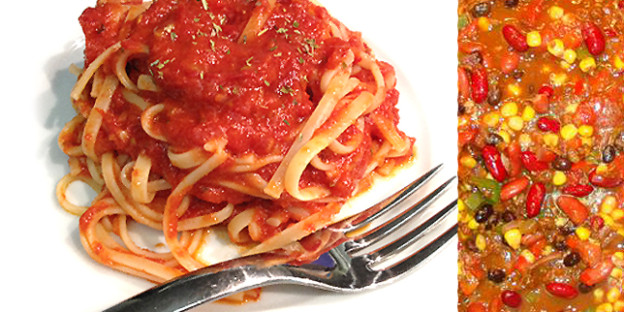
VEGETABLE CHILI

Ingredients:
· 1 tablespoon extra virgin olive oil
· 1 red bell pepper, seeded and diced
· 1 orange bell pepper, seeded and diced
· 1 medium red onion, diced
· 3 cloves garlic, minced
· 2 cups fresh or frozen corn
· 2 cups kidney beans (or one can, drained and rinsed)
· 2 cups black beans (or one can, drained and rinsed)
· 2 cups pinto beans (or one can, drained and rinsed)
· 1 cup low-sodium vegetable broth
· 1 large (28 oz) can crushed tomatoes
· 1 tablespoon cumin
· 1 teaspoon coriander
· 1/4 teaspoon chili powder
· 1/8 teaspoon cayenne pepper (optional if you prefer less spice)
· ½ teaspoon sea salt
· Black pepper and paprika to taste

Preparation: In a large pot over low to medium heat, add the first five ingredients and sauté for 4 minutes. Next, add the remaining ingredients, stir to combine and bring to a boil. Reduce the heat to low, cover with a lid and simmer for 30 minutes. Remove pot from heat and allow to cool, stirring occasionally to release more heat. Once the soup is room temperature, it is ready to be packaged for the freezer. You can use freezer-safe Ziploc bags that take up less freezer space when frozen flat. I personally prefer sturdy food storage containers with tight-fitting lids to minimize the chance for leaks and prevent the transfer of smell to other foods in your freezer. Label with the date and contents, and place in your freezer.

To reheat: The night before you plan to serve the soup, move it from the freezer to the refrigerator overnight. Thirty minutes prior to serving, place in a large pot over low to medium heat. Heat through stirring occasionally until the desired temperature is reached.

SWEET POTATO, BLACK BEAN & KALE ENCHILADAS

Ingredients:
· 1 tablespoon extra-virgin olive oil
· 1 poblano pepper, seeded and diced
· 1 clove garlic, minced
· 1 medium sweet onion, diced
· 3 kale leaves, stems removed and chopped in 1” sections
· 1 tablespoon water
· 1 large sweet potato, baked and mashed or pureed
· 2 cups black beans (or one can, drained and rinsed)
· 1 teaspoon cumin
· ½ teaspoon sea salt
· 3 grinds freshly cracked black pepper
· 10 non-GMO corn tortillas

Preparation:
In a skillet over low to medium heat, add the extra-virgin olive oil and poblano pepper. Sauté 5 minutes then add the garlic and onion. Sauté 5 more minutes. Remove from skillet and place in a large mixing bowl. Next, add the water to the same skillet over low to medium heat. When the water begins to sizzle, add the kale and sauté until just wilted (approximately 1-2 minutes). Strain off the water and add only the kale to the mixing bowl. Add the sweet potato, black beans, cumin, salt and pepper to the mixing bowl. Using a wooden spoon, stir to combine. One at a time, place the black bean, sweet potato and kale filling into a corn tortilla. Wrap and place in a freezer and oven-safe baking dish. Repeat until the dish is filled. Cover the enchiladas with moisture and vapor-proof material such as freezer paper, heavy foil, plastic wrap or a tight-fitting lid. Fix tape around the edges to make a tight seal. Label and date the contents and place in freezer.

To reheat: Place uncovered in a 400 degrees F until heated through (approximately 1- 1 ½ hours).

PASTA WITH HOMEMADE MARINARA SAUCE

Ingredients:
· 10-14 Roma tomatoes
· 1 tablespoon extra-virgin olive oil
· 1 small onion, diced
· 2 cloves garlic, minced over low to medium heat. Heat through stirring occasionally until the desired temperature is reached.

· ½ teaspoon dried oregano

· Sea salt and freshly cracked black pepper to taste

Preparation: Preheat your oven to 300 degrees F. Line a baking sheet with foil and place a cooling rack on top of the pan. Slice each Roma tomato lengthwise and place cut side up on the rack. Roast the tomatoes in the oven for at least 2 but no more than 3 hours. Remove from oven and allow to cool. In a large pot over low to medium heat, sauté the onions and garlic in the olive oil for 3 minutes, stirring occasionally. Turn the heat to low and add the tomatoes, oregano, sea salt and pepper. Using an immersion blender, blend through until you reach your desired sauce consistency.

You can stop here by simply freezing the marinara sauce and cook the pasta just before mealtime or you can prepare your pasta of choice (I love buckwheat for the added protein) and add it into the sauce prior to freezing. If you are freezing the pasta with the sauce, only cook it to al dente. As the pasta is reheated, it will cook just a bit more and you don’t want overcooked, mushy pasta.

To reheat: The night before you plan to serve the pasta, move it from the freezer to the refrigerator overnight. 30 minutes prior to serving, place in a large pot.

Bon appétit to you and your bébés!

This article is by Michelle Marinis courtesy of Well Rounded NY. Conceived with love by former magazine editors Jessica Pallay and Kaity Velez, Well Rounded NY aims to be the singular pregnancy resource for city-savvy moms-to-be. Through reviews, profiles, expert Q&As, local guides and more, Well Rounded curates the New York City pregnancy and helps its readers come to terms – and term! – with pregnancy in the city.

Raised in Texas with a down home Southern upbringing, Michelle Muller-Marinis grew up with a passion for food and cooking. After moving to NYC and beginning a family of her own, Michelle realized the importance of fresh, healthy baby food – she discovered her little ones were always happiest with a spoonful of homemade food in their mouths! She is the founder of Petit Organics and an NYC mom of three boys, Pearce, Rylan and Brandt. You can find Michelle on Facebook, Twitter, Instagram and Petit Organics on Facebook, Twitter, Instagram, and Pinterest.

Battle of the Bumps: Expectant Mom Groups

Expectant Mom Groups


Article & Photo Courtesy of Well Rounded NY.

Find out when an online community is all you need and whether it pays to show up in person.

Regardless of how you get it, support is essential when expecting a baby (especially your first). Lucky for us, it is readily available not only online, but often right in your own neighborhood — especially when you live in NYC. The battle royale? The support group, a meetup of a group of women sharing the same experiences, led by one or more experts in the given field. The worthy contender? The online mom community, such as Facebook groups, sites like BabyCenter or Circle of Moms, and invitation-only listservs.

GUIDANCE

Online Mom Community: You’re relying on the knowledge of other moms, not experts. You will hear valuable feedback on everything from heartburn to breast pumps, but it is based on experience and opinion, not fact.
Support Group: A support group leader is most often a mother, but always a trained professional, either a RN, teacher, lactation consultant or social worker. The instruction is backed by knowledge of various fields. Leaders are often educators and can provide evidence-based resources for expectant moms.
Winner: Support Group. If I don’t know what to do when I can’t feel my baby kicking, I want to ask a pro, not mommytobe23.

CONNECTION
Online Mom Community: You are hearing from pregnant women with similar experiences and asking those same women for help, but one element is lacking: face time. The exchanges are through your computer. Faces are replaced by a photo, and words with text. Most often you are conversing with women that you don’t know by name.
Support Group: Your support group meets weekly: same time, same place, same expectant moms. You are sharing your highs and lows, learning what to expect, and venting together. Many women who meet in support groups often remain friends and stay in touch long after their babies arrive. They experience pregnancy together and become moms together with children of similar ages.
Winner: Support Group. A good playdate pal is hard to find.

PRICE
Online Mom Community: Free. Unlimited. Did I mention free?
Support Group: Many groups require paying the leader, paying for space and resources. They can range from $15 to $30 per meeting and often you must commit to the entire session.
Winner: Online Mom Community. Free always wins, doesn’t it? It is nice to not have to pay for support, but if you find the right group, it is usually worth the investment.

ACCESSIBILITY
Online Mom Community: Social media is available 24/7, which certainly caters to our impulsivity and impatience when wanting answers.
Support Group: Groups are usually offered only once per week, which in the land of pregnant women means a dozen new questions and concerns. Some group leaders, however, offer email access in between sessions to provide additional support for the more anxious.
Winner: Draw. You can’t argue with the fast food drive-thru support offered online, but it is good to know that some support groups extend their help well beyond the actual meetups.

KNOWLEDGE
Online Mom Community: With online groups and listservs, you are gaining knowledge, but that information only pertains to the actual queries posted. For example, you can gain insight into “How many ounces does your three-month old drink?” according to a) who responds and b) how quickly they respond. The community board does not run the gamut of all things pregnancy-related. Knowledge is based on your audience.
Support Group: Groups are more comprehensive. The facilitator has a lesson plan of sorts, ranging from labor to breastfeeding to newborn care. You walk away with an immense amount of knowledge on which you can rely and use towards being a confident parent.
Winner: Support Group. It arms you with comprehensive understanding versus immediate answers.

When it comes down to it, as women we support each other, and different moms have different needs. Support is something you can never have enough of and having people to share your experiences: the good, the bad, and the ugly is invaluable.

This article is by Laura Deneroff courtesy of Well Rounded NY. Conceived with love by former magazine editors Jessica Pallay and Kaity Velez, Well Rounded NY aims to be the singular pregnancy resource for city-savvy moms-to-be. Through reviews, profiles, expert Q&As, local guides and more, Well Rounded curates the New York City pregnancy and helps its readers come to terms – and term! – with pregnancy in the city.

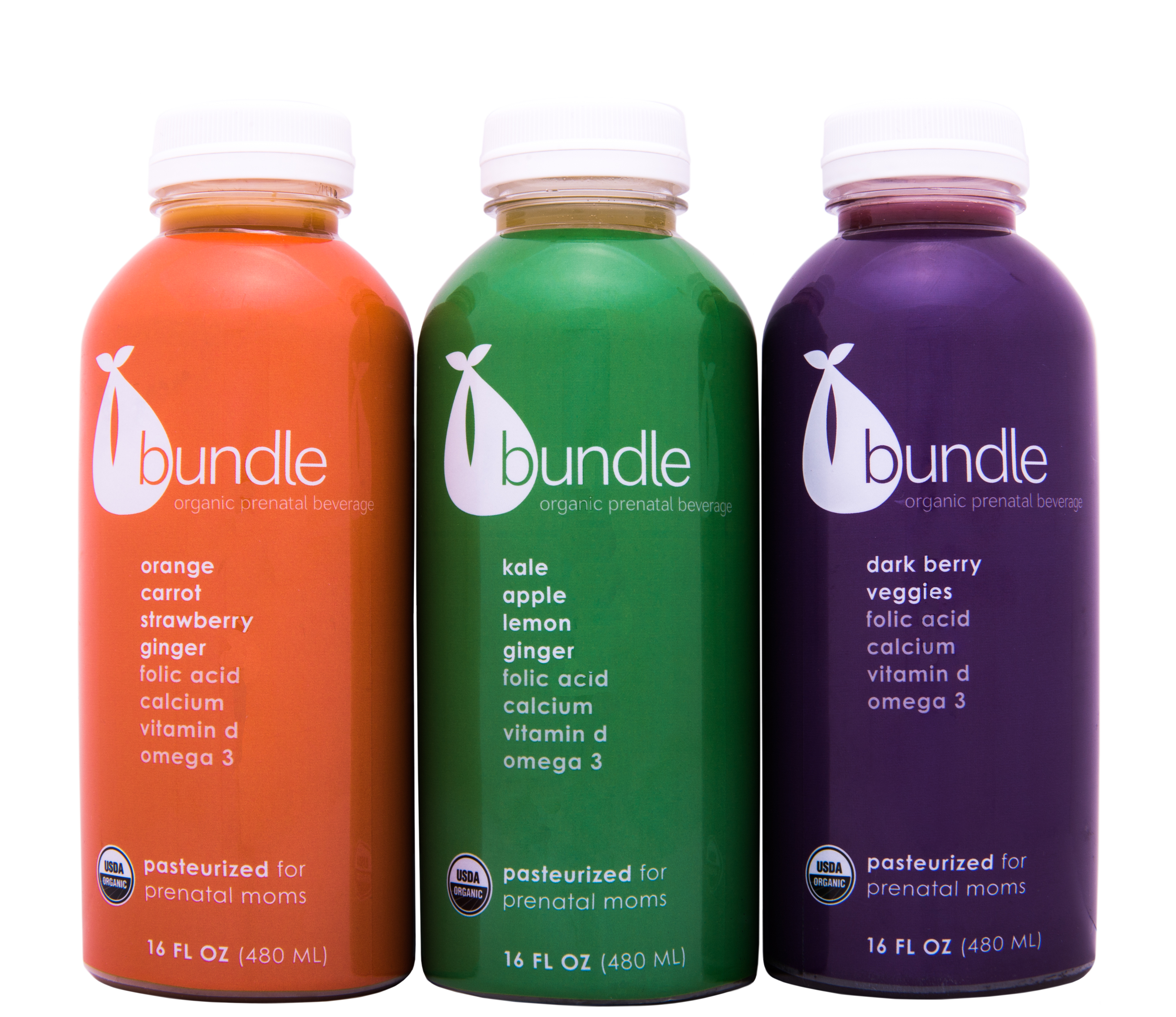
Drinking Organic: Q&A with Kwany Lui Of Bundle Organics - Organic Juices for Pregnancy

Bundle Organics

Eating healthy and focusing on nutrition during pregnancy is essential for the health and wellness of both mom-to-be and baby. Often, most busy moms-to-be struggle to consume the right amount of nutrients and vitamins on a daily basis. So you can imagine our excitement when we sat down with Khawny Lui, Co-founder of Bundle Organics, a line of organic prenatal juices that are fully pasteurized and specially designed to address the unique nutritional needs of expecting moms.

NN: Tell us about the Bundle Organics story. What was the inspiration behind Bundle Organics?

KL: I spent many years working for a large consumer packaged goods company and in particular, an organic brand of cereals, granola bars, and frozen fruit and veggies. Working on that brand completely changed my grocery and eating habits. I started purchasing organic food, joined a CSA (community supported agriculture group), drank raw, fresh-pressed juices and eventually started doing my own juicing.

Soon enough, I met my co-founder, John Mascari, who was a classmate of mine from Harvard Business School. We had a lot of friends and family members who struggled to get the right balance of nutrients in their diet during their pregnancy. Even though most women take prenatal vitamins, everyone still worries about their nutrition and whether they are getting the minerals and vitamins they need from their diet. We decided to dig a bit deeper and partnered with Dr. Errol Norwitz, Chair of Obstetrics and Gynecology at Tufts Medical Center in Boston. He became an advisor for Bundle Organics and informed us that for expecting moms, prenatal vitamins won’t necessarily meet 100% of your daily vitamin and mineral needs. In addition to providing for your own health during pregnancy, you also need to take in large amounts of extra minerals and vitamins that are required to grow a healthy baby.

And so, Bundle Organics was born! We knew there had to be a better way for prenatal moms to get the nutrients they needed without the worry. So, why not through a tasty juice designed specifically for expecting moms to take in addition to their prenatal vitamins, to get the extra ‘bump’ of nutrients they need?

NN: What was the creative process behind the juices? Did you develop the juices yourselves?

KL: We have an advisory board that includes a leading OBGYN and nutritionist, who helped us identify the key nutrients pregnant women needed. We worked with them to formulate the juices with USDA organic fruits and veggies, such as apples, kale, berries, lemon and ginger, that are particularly beneficial for expecting moms.

NN: What are some of the nutritional benefits that Moms-to-be can expect from drinking Bundle Organics juices?

KL: Our juices were made to include just the right amount of nutrients to complement those that pregnant women are already getting from a prenatal vitamin, like folic acid, while also providing those that might be more difficult to obtain, even in a well-balanced diet, such as calcium, iron, omega-3, and vitamin D. It’s a delicious way for moms-to-be to get the nutrients they need, while also safely enjoying the current juice trend! Additionally, folic acid, calcium, iron, and all the nutrients we have in our juices are good for pre- conception and breastfeeding too!

NN: What is your best advice to Moms-to-be for getting all of the necessary nutrition?

KL: Needless to say, eating a balanced diet and maintaining a healthy lifestyle is so important for expecting moms and their growing babies. And as mentioned previously, prenatal vitamins may not necessarily meet 100% of your daily vitamin and mineral needs so you should make sure that you can still get the vitamins and minerals you need from a healthy diet. For moms who are looking for ways to supplement their nutritional intake during pregnancy or while breastfeeding, I hope you’ll give Bundle Organics a try!

NN: Where can Moms-to-be find Bundle Organics products?

KL: They’re currently available for delivery directly from our website at www.bundleorganics.com or from www.amazon.com. Since the juices are pasteurized, they’re not only safe to drink during pregnancy but they’re also easy to ship and transport without refrigeration - which means you can order them without worrying about coolers or ice packs. We also offer a monthly bundled subscription that automatically delivers Bundle Organics to your door each month. You have enough to worry about during your 40 weeks and when baby arrives! Plus, all of our juices are available in convenient, grab-and-go 16 oz. bottles that are also BPA-free – so you can sip worry-free.

NN: What is your favorite flavor Bundle Organics flavor?

KL: That’s a tough one. That’s like asking someone who their favorite child is! We currently offer three delicious and nutritious flavors:

  • Dark Berry and Veggie; Kale, Apple, Lemon and Ginger; and Orange,
  • Carrot, Berry and Ginger. I am slightly obsessed with kale and ginger, so my go-to juice is usually our
  • Kale Apple Lemon Ginger. It’s not too sweet and I think the apple does a good job of covering the natural bitterness of kale.

KwanyLui

Kwany Lui is the co-founder of Bundle Organics, a new line of organic prenatal juices that are pasteurized and specially designed to address the unique nutritional needs of expecting and new moms. The juices are packed with organic fruits and veggies, plus an extra bump of essential vitamins like iron, calcium, vitamin D, omega 3, and folic acid to support a baby’s healthy development.


9 Important Sun (and Sunscreen!) Safety Tips From Nine Naturals

Sun Protection

Spring is finally here and summer is just around the corner. It’s time for bright sunshine and the fun outdoors. This means it’s also time to find a good sunscreen to protect ourselves so we can enjoy that sun.

Safe sun protection is especially important for pregnant women. Due to hormonal changes that occur during pregnancy, a woman’s skin becomes extremely sensitive to the sun. Further - many ingredients in sunscreen may be harmful to pregnant women or babies; choosing the right kind of sun protection is critical.

We’ve put together nine tips to help you understand your sunscreen and choose the best one for you and your family:

  1. Select a sunscreen with at least SPF 30. SPF stands for Sun Protection Factor and measures how much of the sun’s UVB radiation - the kind that causes sunburns – is blocked by your sunscreen. The higher the SPF the longer you can stay in the sun.
  2. Prioritize broad-spectrum protection. Though a high SPF value indicates that burn-causing UVB rays are being blocked, it says nothing about your protection from UVA radiation, which is the kind associated with skin cancer and aging. A “broad-spectrum” label in the United States means that at least 90% of harmful UVA rays are blocked, thereby mitigating burning and other risks.
  3. Avoid oxybenzone-based sunscreens. High levels of oxybenzone in the body were associated with low birth weights in a recent study. Oxybenzone can be absorbed through the skin and is present in about 80% of sunscreens on the market so it’s important to keep an eye out for this ingredient.
  4. Opt for zinc-oxide suncreens. Zinc oxide is a physical sun blocker that protects you by coating the surface of your skin and reflecting away light. Unlike chemical sun blockers, these molecules aren’t absorbed through the skin, which makes them a safer choice. Titanium dioxide is another common physical sun blocker, however it doesn’t appear to work nearly as well as zinc oxide.
  5. Beware of nano-particles. Nano particles are so ultrafine that they can enter into your skin. You’ll find nano particles in some newer zinc or titanium sunscreen formulations, particularly sprays. Nano particles are mostly untested and thus it’s very important for pregnant women and all parents to look for “non-nano” particles – like “non-nano zinc oxide.”
  6. Moderate exposure to Vitamin A. While some Vitamin A is essential for a healthy pregnancy you should get enough from your diet and supplements. Excessive Vitamin A is associated with birth defects and it can contribute to skin damage so pregnant women should be cautious. A very common A Vitamin in sunscreen is retinyl palmitate, but watch for the words retinol or retinoic acid on ingredients lists as well in order to minimize exposure. Plus they’re also found in other skin care products such as acne medications, so be on the look out!
  7. Apply rules for other cosmetics to sunscreen. While we’ve covered smart sunscreen shopping above, don’t forget that general cosmetics concerns apply to sunscreen as well. For instance watch out for parabens, phthalates and other such things that you might be trying to more widely avoid.
  8. Apply efficiently & amply. A number of studies have shown that people typically apply only 20-50% of the sunscreen the FDA uses when determining if a product works. This means that most people aren’t getting the protection they need or are counting on! It’s also just as important to reapply every hour or two to maintain that protection.
  9. Commit to brands that create simple, smart and safe products. We love Nine Naturals’ new Natural Sunscreen SPF 32: It’s an all-natural, non-nano zinc oxide sunscreen, which means that you don’t have to worry about chemical sun blockers like oxybenzone or nano particles entering your blood stream. Like all of our products, our pregnancy sunscreen is free from sulfates, parabens, phthalates, petrochemicals, DEA, synthetic fragrances and artificial preservatives. It’s also formulated with luxurious shea butter and jojoba seed oil to help moisturize you skin. Best part of all, our natural sunscreen is safe for the entire family (though you may be reluctant to share!).

Want more information? Read our article on Natural Sun Protection During Pregnancy.

The Toxins That Threaten Our Brains

Screen Shot 2014-03-25 at 4.12.45 PM

Dear Friends,

Today I want to share with you an important article from The Atlantic. ”The Toxins that Threaten Our Brain” features recent research by two experts in the fields of pediatric medicine and toxicology – Dr. Philippe Grandjean from Harvard Medical School and Dr. Philip Landrigan from Mt. Sinai School of Medicine in Manhattan.

In late February, Grandjean and Landrigan published a paper arguing that exposure of children to industrial chemicals was responsible for a wide array of neurodevelopmental defects. They further argued that these defects are occurring with such massive, worldwide scale as to merit the label of “silent pandemic.”

The Atlantic article highlights several interesting points about the issue of environmental toxins that we find very relevant to pregnant and new moms: 1) chemicals are omnipresent, 2) pregnancy is the most vulnerable time for exposure, and 3) the regulatory process meant to govern these chemicals is very broken.

Omnipresent Chemicals
Grandjean and Landrigan’s research names twelve chemicals we encounter in our everyday lives, a so-called “dirty dozen”. These include some you’ve probably heard of, like lead, methylmercury and ethanol, and others that might surprise you. These substances pop up pretty much everywhere: in our couches, our cars and in our beauty products. For instance, toluene made the list, and, until recently, it was widely used to make nail polish.

Vulnerability during Pregnancy
The concern arises from the growing body of evidence that these chemicals affect neurological development at levels far below the “safe” limits set by the EPA. This exposure has been linked to loss of IQ points as well as a number of behavioral disorders.

Neurological development is a delicate process; billions of cells must orchestrate themselves in space to ultimately create the most complex organ in the body - the brain. Any disturbance of the developing brain generally has permanent consequences because, physically speaking, the brain reaches its finished form by the age of two. This is why exposure to neurotoxins is so much more pernicious during pregnancy and for newborns.

As for what you can do to reduce risk, Dr. Grandjean recommends eating organic during pregnancy when possible. This will at least minimize pesticide exposure, which is a main area of concern. However, this is not a viable long-term solution for our society.

A Regulatory Process in Need of Reform
The point of all this isn’t to make you panic, but rather to draw attention to the glaring faults of our regulatory process in the United States. As with any toxin “the dose makes the poison.” However, the vast majority of the 80,000 chemicals approved for use are untested, and thus we have no idea what the dangerous dose actually is.

The EPA is almost powerless to fully ban a substance – it’s happened just 5 times out of 20,000 cases since the current legislation was put in place. This is why large-scale reform is needed. Dr. Grandjean suggests requiring at least basic testing of new products in order to identify those that need more involved safety research. He also points to the European system that requires more testing for substances that are more widely used as a very reasonable solution. But all of this will require action, and thus far we have failed to keep up with the science. Until we do, it’s critical that expecting mothers do what they can to minimize exposure.

****

At Nine Naturals our mission is to make beauty safe and simple for moms-to-be. We feel that education is the first step in this process and that research like this must be shared. This information empowers us to protect ourselves, our families and our futures. (The Atlantic).

Please share this article with your friends!


Grace
CEO, Founder Nine Naturals