


Posts Tagged ‘sun protection’

9 Important Sun (and Sunscreen!) Safety Tips From Nine Naturals

Sun Protection

Spring is finally here and summer is just around the corner. It’s time for bright sunshine and the fun outdoors. This means it’s also time to find a good sunscreen to protect ourselves so we can enjoy that sun.

Safe sun protection is especially important for pregnant women. Due to hormonal changes that occur during pregnancy, a woman’s skin becomes extremely sensitive to the sun. Further - many ingredients in sunscreen may be harmful to pregnant women or babies; choosing the right kind of sun protection is critical.

We’ve put together nine tips to help you understand your sunscreen and choose the best one for you and your family:

  1. Select a sunscreen with at least SPF 30. SPF stands for Sun Protection Factor and measures how much of the sun’s UVB radiation - the kind that causes sunburns – is blocked by your sunscreen. The higher the SPF the longer you can stay in the sun.
  2. Prioritize broad-spectrum protection. Though a high SPF value indicates that burn-causing UVB rays are being blocked, it says nothing about your protection from UVA radiation, which is the kind associated with skin cancer and aging. A “broad-spectrum” label in the United States means that at least 90% of harmful UVA rays are blocked, thereby mitigating burning and other risks.
  3. Avoid oxybenzone-based sunscreens. High levels of oxybenzone in the body were associated with low birth weights in a recent study. Oxybenzone can be absorbed through the skin and is present in about 80% of sunscreens on the market so it’s important to keep an eye out for this ingredient.
  4. Opt for zinc-oxide suncreens. Zinc oxide is a physical sun blocker that protects you by coating the surface of your skin and reflecting away light. Unlike chemical sun blockers, these molecules aren’t absorbed through the skin, which makes them a safer choice. Titanium dioxide is another common physical sun blocker, however it doesn’t appear to work nearly as well as zinc oxide.
  5. Beware of nano-particles. Nano particles are so ultrafine that they can enter into your skin. You’ll find nano particles in some newer zinc or titanium sunscreen formulations, particularly sprays. Nano particles are mostly untested and thus it’s very important for pregnant women and all parents to look for “non-nano” particles – like “non-nano zinc oxide.”
  6. Moderate exposure to Vitamin A. While some Vitamin A is essential for a healthy pregnancy you should get enough from your diet and supplements. Excessive Vitamin A is associated with birth defects and it can contribute to skin damage so pregnant women should be cautious. A very common A Vitamin in sunscreen is retinyl palmitate, but watch for the words retinol or retinoic acid on ingredients lists as well in order to minimize exposure. Plus they’re also found in other skin care products such as acne medications, so be on the look out!
  7. Apply rules for other cosmetics to sunscreen. While we’ve covered smart sunscreen shopping above, don’t forget that general cosmetics concerns apply to sunscreen as well. For instance watch out for parabens, phthalates and other such things that you might be trying to more widely avoid.
  8. Apply efficiently & amply. A number of studies have shown that people typically apply only 20-50% of the sunscreen the FDA uses when determining if a product works. This means that most people aren’t getting the protection they need or are counting on! It’s also just as important to reapply every hour or two to maintain that protection.
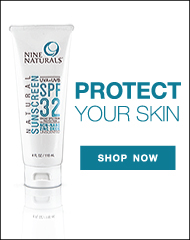
  9. Commit to brands that create simple, smart and safe products. We love Nine Naturals’ new Natural Sunscreen SPF 32: It’s an all-natural, non-nano zinc oxide sunscreen, which means that you don’t have to worry about chemical sun blockers like oxybenzone or nano particles entering your blood stream. Like all of our products, our pregnancy sunscreen is free from sulfates, parabens, phthalates, petrochemicals, DEA, synthetic fragrances and artificial preservatives. It’s also formulated with luxurious shea butter and jojoba seed oil to help moisturize you skin. Best part of all, our natural sunscreen is safe for the entire family (though you may be reluctant to share!).

Want more information? Read our article on Natural Sun Protection During Pregnancy.
Fourth of July Guide for Pregnancy

At Nine Naturals, our staff is heading all over the country for the Fourth of July – to the Pacific Northwest, out to Long Island and down to the south. It got us thinking about the necessary precautions that pregnant ladies should take to stay safe during your barbeques and outdoor adventures and enjoy the holiday. Here are a few reminders:

  1. Be wary of unrefrigerated food, uncooked meats and fish high in mercury. Food that has been left unrefrigerated for too long is a bacteria risk such as potato salad or anything with mayo. Also be cautious of barbecued meats. Make sure that whatever meat products you’re eating has been thoroughly cooked. Uncooked or insufficiently cooked meat and fish can put you at risk of contracting food poisoning from bacteria such as salmonella, E. coli, or campylobacter. Also be mindful of the type of fish you eat. Avoid large, predatory fish, such as marlin, shark and swordfish, which are known to contain high levels of mercury.
  2. Stay hydrated. Drink lots of water! Soda and sugary drinks just won’t cut it. Let’s face it, you’ll probably want to be outside, enjoying some activities, taking a turn on the grill. You should enjoy the holiday! But take into account that you’ll be sweating, thus losing more water from your system than normal. So keep a BPA-free water bottle handy! Dehydration during pregnancy can be serious—insufficient fluids during the first trimester can lead to insufficient amniotic fluid and, in the worst cases, cause premature labor.
  3. Try to stay out of the sun. This goes hand in hand with staying hydrated because the heat from the sun speeds up the rate of dehydration. But this doesn’t mean that you have to hide indoors; a reasonable amount of exposure to the sun is fine. We recommend naturals ways of safeguarding yourself from the sun as well as our next point—sunscreen.
  4. Sunscreen is your best friend. Correction—all-natural, non-toxic sunscreen is your best friend. Be sure to apply a sunscreen with an SPF of at least 45. And even if the forecast near you isn’t looking all that bright for this July 4th, sunblock is still a good idea, as pregnancy causes the skin to be more sensitive to the sun.
Check out our Top Natural Sunscreen Picks for Pregnancy, if you need help picking one out.
  5. Be careful when walking after sundown and being in overly packed crowds. Enjoy the fireworks! Since fireworks happen after sundown though, watch your step in the dark! Also, be cautious of going places with rowdy or packed crowds where you run the risk of getting pushed around. If you want to look fabulous but feel sure-footed, checkout some of our comfortable and stylish shoe recommendations from last week.

Safe travels!

Natural Sun Protection During Pregnancy

Having trouble sifting the helpful sunscreen information from the hype? Here are some tips for managing your health in the sun.

Recommended Daily Sun Exposure

Daily sun exposure is critical to the body’s production of Vitamin D, a deficiency which can lead to preeclampsia and cesarean section birth.[1] Yet the skin of pregnant women is more sun-sensitive, and too much sun can incite chloasma.[2] The major takeaway is a recommendation of 15-30 minutes of activity in the sun without sunscreen, outside of peak hours.

Safeguarding Against the Sun

  • Year-round sun protection. The sun’s rays aren’t harmful only in the heat of summer. The ultraviolet rays responsible for the harm pose damage every day.
  • Peak sun avoidance. The sun’s rays prove strongest and most damaging to skin during the peak hours of 10am and 4pm.
  • Wide-brimmed hats. This provides chemical-free sun protection to your scalp, face and upper body. The large brim can create a circle of shade for additional sun safety.
  • UVA/UVB sunglasses. Ultraviolet radiation can harm the corneas and lenses of your eyes and may also spur cataract development. Sunglasses specifically marked for UVA and UVB protection should keep your sight safe.
  • Sun protective clothing. This is another measure of protecting your skin without the use of chemicals. For the strongest defense, ensure that you wear dark-colored clothing made from thickly woven material.
  • Use sunscreen on areas of unexposed skin. Sunscreen works best and most safely when used only on those areas that your hat, glasses, and clothing don’t shield.

Choose a Safe Sunscreen, Part 1: Avoid These Harmful Ingredients

  • Vitamin A. Yes, the same vitamin that supports eyesight can corrupt a sunscreen. The EWG found that Vitamin A can become a carcinogen when exposed to sunlight. It has also been linked with birth defects. Vitamin A may take any of the following names on sunscreen labels: retinyl palmitate, vitamin A palmitate, retinol hexadecanoate, and retinol palmitate.
  • Oxybenzone. This can disrupt hormones and incite skin allergies. It has also been linked to low birth weight in baby girls. [3] It’s also known as benzephenone or benzephenone-3.
  • Titanium oxide. Scholarship shows that this ingredient is carcinogenic and damages DNA.[4]
  • Nanoparticles. The use of nanoparticles in sunscreens prevents the white residue that some products may leave behind. But studies suggest that nanoparticles may be absorbed by the skin, entering the human placenta via the blood-brain or the placental-fetal barrier. [5]
  • Parabens, Fragrance, Other Artificial Ingredients. Like other skincare products, sunblocks can contain harmful ingredients that you want to avoid like parabens and chemicals hidden in fragrance.

Choose a Safe Sunscreen, Part 2: What Makes a Safe Sunscreen?

  • Water resistance and full/broad-spectrum protection. Your sunscreen should protection against both types of UV rays. It should also hold up when you enter the waves.
  • Non-nanoengineered zinc oxide. This ingredient blocks UV rays safely. When not in the form of nanoparticles, it won’t be absorbed into the skin.
  • Creams, NOT sprays. Sprays and powders create unsafe airborne particles of sunscreen. Reapply the cream often.
  • SPF between 30 and 50, not higher. Sky-high SPF does not translate to dramatically better sun protection.
  • Natural ingredients. Make sure to take a close look at the inactive ingredients as well, looking for a product that uses only natural ingredients to form the base cream of the sunblock, like our Natural Sunscreen SPF 32.


[1] Shin JS, Choi MY, Longtine MS, Nelson DM. (2010) Vitamin D effects on pregnancy and the placenta. National Institutes of Health. 2010 Dec;31(12):1027-34. Epub 2010 Sep 22.

[2] American Pregnancy Association. (2010, March). What’s a Sun Goddess to do During Pregnancy: Pregnancy & Timing.

[3] Laas, M. (2008). Sunscreen Chemical ‘Widespread’ in U.S. Population. Skin and Allergy News.

[4] Kuempel, E., Ruder, A. Titanium Dioxide (TiO2). International Agency for Research on Cancer.

[5] Wick P, Malek A, Manser P, Meili D, Maeder-Althaus X, et al. 2009 Barrier Capacity of Human Placenta for Nanosized Materials. Environ Health Perspect 118(3): doi:10.1289/ehp.0901200