Before we start, it is critical to mention that there is no such thing as the “safest seat”. The safest seat is the one that installs securely in your vehicle, fits your child properly, and you use properly on every trip.
When recommending a rear-facing only seat, The Car Seat Lady takes into consideration 4 key design features:
1. Will the base install securely in most vehicles… and in particular in the center of most vehicles?
- Studies show the center is 43% safer than the side… so with one child it is best to put the baby in the center (assuming your car seat can be securely installed in the center). Not only is the center safer for baby, but also it tends to give the best layout for the back seat as with baby in center you can comfortably fit 2 adults in back… whereas if baby goes on the side few adults can squeeze into the already narrow center with a baby seat on one side of them. The other advantage is that having the car seat in the center typically allows the front seats to both come back as far as they need to - whereas if the car seat goes on the side, the person sitting in front of the car seat has to move their seat up more than they might prefer (as the front seat should not touch the child’s car seat).
- Most vehicles do not have the lower anchors of the LATCH system in the center seat; therefore, you will need to use the vehicle’s seat belt to secure the car seat in the center. While the seat belt and LATCH are equally safe means of securing the car seat, the seat belt is often more difficult. While you and I ride around with our seat belt loose while we drive, and just rely on the belt to lock when we slam on the brakes, this does not work for the child’s car seat as it will be very loose during regular driving, and even looser in a crash. Therefore, the seat belt must be locked and tight around the child’s car seat at all times. There are a few car seats on the market that have a locking device built right into the car seat to keep the vehicle’s seat belt locked and tight - which makes installation not only easier, but in many cases safer as you are more likely to get the secure installation you need.
2. Will the carrier install securely by itself (i.e. withOUT the base) in most vehicles?
- If you go in a friend’s car, jump in a taxi, or rent a car on vacation you will be traveling without the base - and it will be important that you can get a secure installation with just the carrier. Most seats sold in the US route the vehicle’s seat belt around the carrier in one way - but a few seats use a different routing path, a routing path most commonly seen in Europe. While the traditional American-style path will yield a secure installation in about 1 in 5 vehicles, the European-style path will yield a secure installation in about 4.9 out of 5 vehicles. The European-style path involves wrapping the shoulder belt around the back of the carrier which adds stability and gives a more secure fit.
- For more on using the carrier without the base and the European-style path, see this interactive image here.
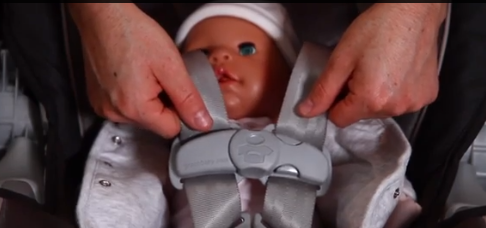
3. Will it be easy to strap the baby into the seat every time (when you are sleep deprived, your child is screaming, and you are already 15 minutes late)?
- The straps should loosen and tighten easily (as if you are making the straps properly snug you should have to loosen them to get the baby out, and then retighten them once you buckle baby back in)
- The straps should not get uneven (this drives parents bonkers… and leads to kids not being strapped in properly). While all straps can twist, some are much less prone to twisting than others; twisted straps are bad for baby… and parent’s temper.
4. Will it fit whatever size baby you take home from the hospital?
- While many rear-facing only seats still start at 5 pounds, we feel it is important that parents choose one that starts at 4 pounds since about 10% of all babies leave the hospital weighing less than 5 pounds. Having a new baby is stressful… worrying that your car seat is too big for your baby is one stress you don’t need to add to the list.
The Car Seat Lady’s Top Picks for Rear-facing-only seats (also called infant seats):
Note: ALL 3 seats below:
- have a European-style path for the carrier (when it is used without the base)
- can be used for babies as small as 4 pounds
- have harness straps that adjust easily
1. Cybex Aton2
What we like most:
- Smallest footprint of any rear-facing only seat, taking up 4 inches less room into the front seat than the Graco listed below (and 3 inches less room than the Nuna Pipa) and most other car seats, making it a great choice for small cars or families needing to put the seat behind a taller driver (will fit behind a tall driver in a Mini Cooper!)
- Easy base installation with seat belt OR lower LATCH anchors
- Load leg on the base (on Aton2)
- Base has a narrow footprint so will fit in center seats that are exceptionally narrow
2. Graco Snug Ride 35 Classic Connect
What we like most:
- Lasts a few months longer than the Cybex (it is bigger and a little heavier) - so for those who will be doing lots of travel by plane/taxi, this wins for longevity
- Great option for parents on a budget
- Easy base installation with the seat belt
- Base has a narrow footprint so will fit in center seats that are exceptionally narrow
3. Nuna Pipa
What we like most:
- Very easy base installation when using the lower LATCH anchors - since they are rigidly connected to the Nuna and you literally plug the car seat into the vehicle… no straps to pull tight!
- Super lightweight - at just 7.7 pounds - but will last a few months longer than the Cybex as it is approximately 1.5 inches taller in the seated height (and most babies are too tall before too heavy in these types of seats)
- Easy base installation with the lower LATCH anchors
- Load leg on the base
- What we have reservations about:
- Does not yield a secure installation with the seat belt in quite a few vehicles… so we would recommend this seat only for families that will be installing the base in a position that has the lower LATCH anchors (typically on the side seat)
Stroller compatibility:
Please see this chart for the Cybex & Graco. Currently, the Nuna Pipa will fit onto the Nuna Pepp, Bugaboo Cameleon3, and UPPAbaby Vista (using the appropriate adapter, sold separately).
Alisa is a NYC pediatrician and nationally certified child passenger safety instructor best known as The Car Seat Lady. With 15 years experience as The Car Seat Lady, she has helped families install more than 10,000 car seats. Follow her on Facebook and on her blog!