Archive for the ‘Haircare’ Category

The Bump: 10 Safe Skincare Products to Use During Pregnancy

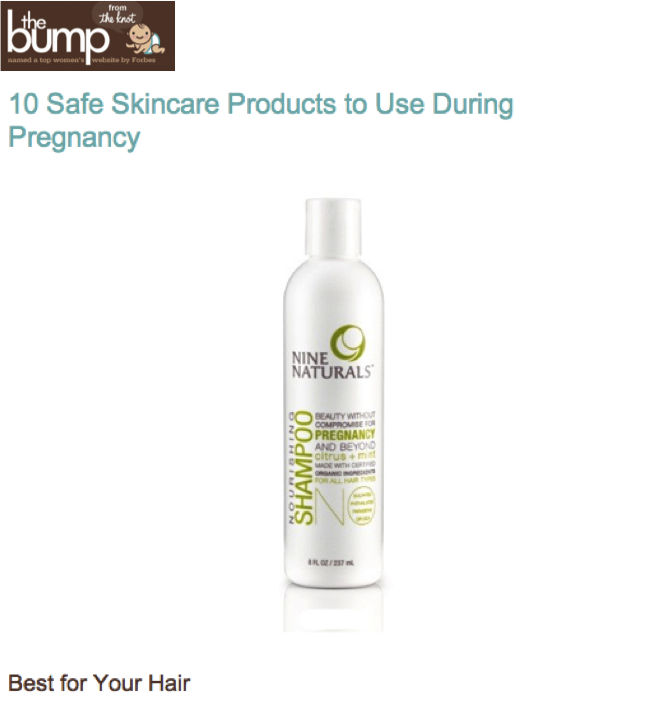
Many thanks to The Bump for featuring Nine Naturals on its list of 10 Safe Skincare Products to Use During Pregnancy! We couldn’t be happier that our Citrus + Mint Nourishing Shampoo was rated “Best For Your Hair” and The Bump-approved for pregnancy and beyond. The Bump, from The Knot, is an online community that provides a wide array of information for moms and moms to be, from pregnancy, baby, nursery, and more.

Nine Naturals on The Bump

Best for Your Hair

This Citrus + Mint Nourishing Pregnancy Shampoo from Nine Natural is sulfate-free, Paraben-free, Phthalate-free, BPA-free, Triclosan-free, DEA-free, Petrochemical-free and, if that wasn’t enough, it’s also made without artificial dyes and chemicals. So your locks will feel (and look!) silky and luxurious. $20, NineNaturals.com

RackedNY Beauty Diary: Nine Naturals’ Grace Lee On a Week’s Worth Of Non-Toxic Beauty


Grace Lee_headshot
Screen Shot 2014-01-19 at 7.34.25 PM

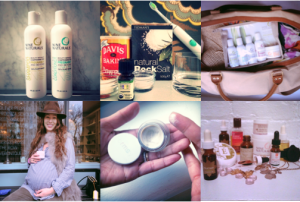
Nine Naturals Founder Grace was honored to be included in a special beauty feature by one of the top style and fashion news sites in New York City, RackedNY. In Grace’s Beauty Diary, RackedNY followed 7 days of Grace’s non-toxic beauty and lifestyle routine. (Spoiler alert: It includes amazing hair using Nine Naturals Nourishing Shampoo and Conditioner, gorgeous stretchmark-free pregnant women who are devoted to Nine Naturals Regenerative Belly Butter and adorable pics of Grace’s 2-year old daughter, Charlotte.)

From RackedNY: Grace Lee doesn’t want you to poison your baby. When she learned how chemicals in beauty products can impact unborn tots, Grace left her job as VP on Wall Street to dedicate her life to creating chemical-free, high-performing beauty products for expecting women. Enter Nine Naturals: Grace’s answer to the dilemma of staying beautiful during pregnancy (and beyond), without accidentally hurting your little-one-to-be.

In her week of documented beauty, Grace shares the app that brings a blowout to her apartment, her DIY skin hydrating routine, and a sunblock that’s safe for the whole family (oh yeah, her week ends in Mexico—lucky girl). Click through for seven days of non-toxic beauty with Grace Lee.

Read More on Racked NY…


All about Phthalates! Why and How to go Pthalate-Free.

Fotos-de-perfumes-color-naranja

Nine Naturals has mastered a few important things, not the least of which is pronouncing the word “phthalates.” We’ve taken great care to keep our products and packaging completely void of phthalates. We also stay current on science about phthalates so that we can keep our customers informed about how to avoid phthalates in their daily lives.

What are Phthalates?

Phthalates are a group of chemical compounds commonly found in household products, from children’s toys to plastic water bottles and from cleaning supplies to shampoo. It’s been estimated that approximately 70% of personal care products include these chemical compounds.

Phthalates are used to make plastics more flexible, transparent, durable and pliable. They also improve how well paint can be applied (as in your nail polish) and help scents linger in the air longer. Phthalates can also be found in medical tubing, pill encasements and IV bags.

Because of their widespread use by manufacturers in a number of industries, phthalates can prove very difficult to avoid.

Here is a quick list of products that commonly contain phthalates:

  • Shampoos and conditioners
  • Hair coloring products
  • Eyeliner / eyeshadow
  • Blush
  • Perfume
  • Air freshener
  • Nail polish
  • Hairspray
  • Deodorant
  • Feminine products
  • Plastic food packaging
  • Plastic wrap
  • Plastic water bottles

Why Phthalates Are Dangerous.

One of the notable behaviors of phthalate compounds is that their decomposition accelerates as plastics age – this is one of the reasons that phthalates are so dangerous and nearly impossible to completely avoid.

Phthalates pose a very high risk to your health and to your baby’s well being. Potentially carcinogenic, phthalates can prove toxic to developing fetuses and can produce birth defects in baby boys.

Phthalates also interrupt your body’s natural hormonal processes – “hormone disruptors.” Phthalates can wreak havoc on your fertility levels, jeopardize your endocrine system, and can also incite endometriosis and PCOS, a serious ovarian disorder.

The good news about phthalates is that they do not accumulate in the body, unlike other harmful chemical compounds. Speaking unambiguously to the ubiquity of phthalates, a 2001 CDC study revealed that every single person in the study had phthalates in his or her body. Because women so often use products containing phthalates (like cosmetics), sustained exposure to these chemicals is high for females.

Women in their childbearing years and children hold the greatest risk of phthalates producing serious consequences to their health and their baby’s health. Research from the Columbia University Mailman School of Health correlated prenatal exposure to phthalates to several disorders in preschool-aged children: reduced mental development, motor skill deficiency and behavioral challenges. Women who unwittingly use products containing phthalates can jeopardize their children’s future.

How to Minimize Exposure to Phthalates

Identifying phthalates in your product’s ingredient list seems challenging and tedious. But here are a few tips to help you:

  1. Avoid all products from companies that list “fragrance” as an ingredient. In our blogpost about “How to Read a Label,” we explained that, due to patent guidelines, fragrances are legally protected from having to disclose contents. Phthalates are often used in creating fragrances, but are not disclosed as an ingredient because they are a part of the “fragrance” of a product. As an alternative, use products that, like Nine Naturals, only use natural, plant-derived fragrances.
  2. Seek out transparency on product labels. Purchase from companies who disclose all the ingredients contained in their products. Consumers shouldn’t have to guess what goes into the products they use on their body. For instance, Nine Naturals always discloses the exact fragrance of its products and never hides ingredients behind a “fragrance” label.
  3. Avoid products containing one of these acronyms: DBP, DEHP, DMP, or DEP. Also note that “dibutyl / diethyl ester,” or any variation thereof, signals phthalates. So does “1,2-benzenedicarboxylate.”
  4. Use glass containers to store food. Phase out that plastic Tupperware! And promptly throw away Tupperware that is already showing scratches and other signs of damage.
  5. Never use plastic containers or plastic coverings, like plastic wrap, when heating food. Heat can accelerate the breakdown of phthalates in plastic. Transfer your food to a glass bowl or plate and use a paper towel or a plate as a cover.

A Natural Solution

Keep in mind – natural hair maintenance offers more than phthalate-free, chemical-free safety; it also fosters sensational hair. Pregnant women who use plant-based, natural products can capitalize on their fuller locks without worry.

Mother Nature helps achieve this with stunning “ingredients” like cupuaçu butter, which nourishes hair with its Omega-6 and -9 fatty acids. Meadowfoam seed oil naturally protects hair against UV radiation. And impressive shine is just one asset of the oil from the sweet almond. Nine Naturals’ phthalate-free, all-organic shampoo and conditioner incorporate these and other healthy-body, healthy-hair ingredients.

How to Read a Label? Standards, Labeling, Honesty & Deception on Product Labels

Screen Shot 2013-10-16 at 4.17.13 PM

Water. That’s the one word you probably recognize on a beauty label. The rest of the ingredients in beauty and cosmetic products, including even the natural ones, have complicated names – scientific names that are long, unwieldy and barely decipherable in pronunciation or meaning. This can be a unsettling problem, especially as a pregnant woman or new mom who wants to be careful of the ingredients she uses on her skin.

The very complicated task of reading a label is a direct effect of the INCI’s (International Nomenclature of Cosmetic Ingredients) standards for cosmetic products worldwide, which specifies what and how certain information must be conveyed to the consumer through cosmetic labels. Although the wording can be challenging, INCI’s system provides a consistency that ultimately helps the consumer:

  • Ingredients must be listed by weight, from the greatest to the least amount inside the bottle.
  • Manufacturers’ ingredients must fit into 1 of 35 INCI categories, such as emulsifiers, deodorants, and preservatives, simplifying the consumer’s process of identifying and evaluating product and their ingredients.
  • Labels must list the INCI (basically, universal) name for a product. For example, Vitamin E must be represented as Tocopherol.

Providing additional support to the consumer, the FDA also regulates cosmetic product labeling in the US via its thorough Cosmetic Labeling Manual. Their Labeling Claims site lets consumers pursue action against products that have been “misbranded,” or improperly labeled.

Important to note: These standards for labeling should not be confused with cosmetic product regulation. In spite of the many chemicals that appear in cosmetics, the FDA has limited regulations around the ingredients NOT pre-approve labeling before a product reaches consumers. The FDA does NOT strictly regulate the cosmetics industry in the way it regulates the drug industry.

This is one of the many reasons it is so important to know how to read your product labels.

Here are a few deceptive words on product labeling:

Fragrance: Manufacturers are not required to disclose the ingredients of fragrances, as this information is legally considered a trade secret (which companies are granted the right to protect). This is particularly dangerous, because fragrances abound with synthetic chemical compounds, such as allergens, phthalates, and neurotoxins. To guard against this, seek out brands like Nine Naturals that use only plant-based essential oils for fragrance and fully disclose the ingredients in those fragrances.

Natural: This is a marketing word - not a scientific label. The FDA requires only one natural ingredient to be present for an entire product to be labeled “natural.” This means that a company can include one natural ingredient amongst multiple harmful chemical ingredients and still call the product natural. How to protect yourself? Spend time studying ingredient listings on products.

USDA Certified Organic: Product labels that feature this term are manufactured by operators who comply with annual inspections, as well as random checks, to ensure their adherence to USDA’s organic standards; this includes, among many things, a three-year process to properly fortify the farmland. It’s also important to note that many farmers that do adhere to “organic” standards cannot afford the fee to apply the “organic” label to their products.

Here are a few permutations of the USDA’s “organic” label:

    • 100 percent organic: Product must contain (excluding water and salt) only organically produced ingredients. Products may display the USDA Organic Seal and must display the certifying agent’s name and address.
    • Organic: Product must contain at least 95 percent organically produced ingredients (excluding water and salt). Remaining product ingredients must consist of nonagricultural substances approved on the National List or non-organically produced agricultural products that are not commercially available in organic form, also on the National List. Products may display the USDA Organic Seal and must display the certifying agent’s name and address.
    • Made with more organic ingredients: Products contain at least 70 percent organic ingredients and product label can list up to three of the organic ingredients or “food” groups on the principal display panel. For example, body lotion made with at least 70 percent organic ingredients (excluding water and salt) and only organic herbs may be labeled either “body lotion made with organic lavender, rosemary, and chamomile,” or “body lotion made with organic herbs.” Products may not display the USDA Organic Seal and must display the certifying agent’s name and address.

Nine Naturals believes that intentionally vague labeling isn’t fair to consumers, nor is it a healthy or sustainable way of marketing and talking about our products. All of our products’ ingredients are 100% naturally derived and plant-based. Though we’d like the labeling to reflect this simple and important company standard, we are required to include the lengthy INCI name of each ingredient on our product packaging.

Nine Naturals also provides an Ingredient Glossary, which clearly defines each ingredient we use and its beauty benefits to you so that you can understand exactly what goes into our products and onto your hair and body.

What frustrates you about product labeling? How do you shop for cosmetics and beauty products while avoiding the ingredients you dislike?


Things We’ve Read - Week of September 9th

MeandAuggie2jpg-2589288_p9

10 Questions Everyone Needs to Stop Asking Pregnant Women: Jessica Ciencin Henriquez, a guest blogger on HuffPo implores readers to heed her advice and mind the boundaries of pregnant women by canning it on certain questions, like “Was it planned?” Good Grief.

The Unnatural Mom: We love this honest perspective and think it’s a true tribute to every mom’s freedom to do things her way. Krista (“kinfante”) discusses her decisions about what aspects of her pregnancy decisions she wanted to be “natural” and why the “unnatural” paths might inappropriately judged.

Hair Tips: Organic vs. Natural: From the hair community Bangstyle, Audrey Adrine discusses the important misunderstandings about organic haircare.

An Herbal Approach to the Cold & Flu Season: Mothering’s Amy Paolinelli and Melanie Mayo actually speak in the context of helping children through their colds and flus, but we think this is a great article for pregnant women who want to keep it all-natural when they’re feeling under the whether - think peppermint, elder, garlic and more …

Braids are Back!: Refinery29 tells us that we can channel Little House on the Prairie again when we’re doing our hair in the morning. Per observations at NYC’s recent Fashion Week and R29′s spot-on expertise in style, braids are popular this fall - tight, loose, high, hanging … And this link has 10 great examples.