Archive for the ‘Parenting Tips’ Category

Things We’ve Read – Week of December 9th

Screen Shot 2013-12-15 at 12.18.44 PM

BPA is still everywhere, and mounting evidence suggests harmful effects. (Washington Post): These days the baby aisle shelves are lined with products proudly announcing: “BPA-free.” But the chemical is found in many other common items: medical devices, dental sealants and compact discs, and even paper receipts. In short, it’s pretty hard to avoid the chemical.

Mindfulness for Fathers: 5 Difficult Feelings We Can Learn to Love (Huffington Post): What feelings and fears do guys confront when becoming a father? One dad describes how one man came to appreciate and even love what emotions he once feared.

Wall Street Mothers, Stay-Home Fathers (NYTimes): Growing numbers of women on Wall Street say is enabling them to compete with new intensity: a stay-at-home husband.”… the couples have come to question just what is male behavior and female behavior, noting how quickly their preconceived notions dissolve once they depart from assigned roles.”

High chair injuries on the rise, study finds (Today): The number of high chair-related injuries increased by more than 22 percent between 2003 and 2010, according to a nationwide study. This article covers explanations about this trend and tips for protecting your little one in his or her high chair.

7 Ways a Second Pregnancy Can’t Compare to a First (Huffington Post): What do kumquats have to do with pregnancy? An honest & funny comparison of one NYC mom’s experience with her second pregnancy vs. her first.

New Mom Seeks Other New Moms: How to Find and Form Your Own Mom Community

Becoming a mom is a wondrous but challenging time and the support, information and camaraderie of other moms is crucial for most women. But it can be a challenge to find that community! You’re busy with a newborn and making new friends might feel like a chore.

That’s one of the reasons we love NYC-based Kidsy, which enables new moms to use the digital social world to find community in the physical world. We sat down with Michael Tai, one of the founders of Kidsy, and he told us about the many ways that his site facilitates fun and frequent activities for new moms ready to meet each other. Here’s a story from one of the Kidsy moms … Melinda Chang.

Screen Shot 2013-12-10 at 5.53.06 PM

Isolation. That’s the word I would use to sum up my holidays last year. I was holed up in my apartment tending to a very demanding newborn. That holiday season was spent in tears (from both me and the baby!) and I was too concerned about feeding schedules, sleep training and poopy diapers to enjoy the holiday events taking place around us.

I was the first among all my friends & family to have a baby. While my support network was amazing, I was going nuts and desperately needed to talk to other new moms. This holiday season, I have it together (mostly!) thanks in large part to an amazing community of moms. They have taught me so much and have supported me tremendously through this tough first year.

Do yourself a favor and find a community of amazing moms in your area. Some advice that worked for me:

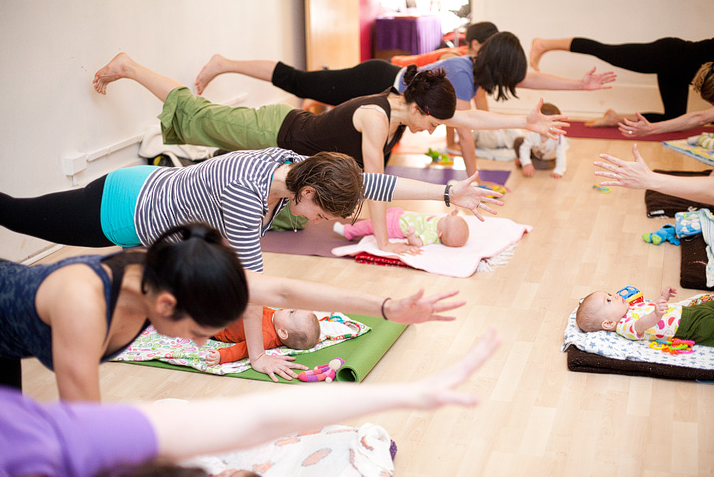
1. Get out there. Yes, it seems daunting – especially when you’re sleep deprived and barely have enough time to shower, let alone get dressed and put on makeup. My husband had to literally push me out the door but the first time is always the hardest. It gets easier (and more fun!) with every outing, I promise. A great first and easy step would be a breastfeeding support group, a postnatal yoga class or a daily stroll around the neighborhood for some fresh air with the baby.

2. Be bold & speak up. As an adult, you may not have acquired a lot of new friends apart from the ones you’ve acquired from school and work. In this new stage in life, you will probably find it easy to build bonds with other moms who are experiencing same things you are experiencing. But you have to speak up! Most moms are dying to talk about their kids and ask others about theirs so if you want to strike up a conversation with a mom, don’t be shy! Next time you walk to the coffee shop, speak to the other moms you see! As you get out more, new moms will seek you out, too.

3. Multitask. Crave adult conversation and want to spend quality time with the little one? The best way is at other new mommy events. Go online and see what’s available in your area. A mommy friend first told me about Kidsy, a site that curates unique and exclusive family activities and events. It was a total lifesaver and, to this day, I still meet a ton of awesome like-minded moms at their super fun events. And my little one is now making friends too.

4. Take leadership. Do you want to test out a new music class or explore a new park, but don’t want to do it alone? Try organizing an event with friends or use social networks like Kidsy to help you organize one for you. Chances are, if you want to try something out, there are plenty of other moms out there who want to try it out too!

Happy holidays, ladies! Feel free to comment with any other tips!

Melinda Chang lives in New York City with her husband and one-year old daughter. Special offer for Nine Naturals moms: get a free trial Kidsy membership athttps://www.kidsy.co/ninenaturals! Kidsy is a new family concierge service that curate unique family experiences and offers personalized activity recommendations.


Things We’ve Read – Week of December 2nd

Pregnancy

Prenatal Depression: What I Didn’t Expect When I Was Expecting (NYTimes): An enlightening recounting of sadness during pregnancy. Sometimes, placenta doesn’t produce enough progesterone; this offset causes symptoms of depression.

Fertility Doctors Aim To Lower Rate Of Twin Births (NPR): Big multiple births (like Octomom) have decreased but the twin rate is stagnant. Doctors want to lower the rate of twin births and increase the rate of healthy, live births.

The Toxins That Affected Your Great-Grandparents Could Be In Your Genes (Smithsonian): An interesting study of the staying power of toxins finds evidence of hardy and insidious chemicals 4 generations after exposure.

Breathe easy by avoiding chemicals in home items (Philly.com): Is your house off-gassing? Probably. That’s what happens when chemical substances evaporate and get into the indoor air.Screen Shot 2013-12-08 at 2.51.18 PM

Dandruff Shampoo could Mess up Waterways (Scientific American): A study has detected fungicides from anti-dandruff shampoos in the water. They retard the growth of larger plants which offsets the ecosystem and deprives marine animals of food.

Shop Smarter: Buying Organic While Pregnant - Introduction to the Dirty Dozen and Clean Fifteen

Buying organic produce has become an increasingly popular shopping habit of consumers in the recent years. Although, organic produce is priced distinctly higher than their non-organic counterparts, buying organic produce comes with its benefits. By shopping organic, one avoids ingesting pesticides that are found in non-organic produce—the Environmental Working Group (EWG) has estimated that individuals can reduce their exposure to pesticides by 80% by eating organic produce.

Avoiding the consumption of pesticides is important to the health of you and your family. According to laboratory studies conducted by the EPA, long-term exposure to pesticides via consumption can cause birth defects, nerve damage and cancer, depending on the type and amount of pesticide exposures.

To help educate consumers as what to avoid when shopping for non-organic produce, the Environmental Working Group (EWG) releases the annual Shopper’s Guide to Pesticide in Produce detailing produce that contain the highest amount and lowest amount of pesticide residue.

In government tests conducted by the FDA and USDA and analyzed by the EWG, detectable pesticides were found in approximately 67 percent of these foods after being prepped for cooking (washing and peeling). Every year, the EWG uses the government pesticide-testing data to compile a list of the fruits and vegetables with the greatest amount of pesticide residue and the least amount of pesticide data known as the Dirty Dozen and Clean Fifteen.

Dirty Dozen

The Dirty Dozen is a list of the 12 fruits and vegetables most likely to be contaminated with pesticides. When conventionally grown, the fruits and vegetables collected tested positive for over 47 chemicals.

The most contaminated fruits are apples, strawberries, grapes, peaches and imported nectarines.

The most contaminated vegetables are celery, spinach, sweet bell peppers, cucumbers, potatoes, cherry tomatoes and hot peppers.

In addition, the EWG cautions consumers about conventionally grown summer squash and leafy greens.

Clean Fifteen:

On the flipside, here are the Clean Fifteen - the 15 fruits and vegetables possess the lowest amount of pesticides after they had been washed: asparagus, avocado, cabbage, cantaloupe, eggplant, grapefruit, kiwi, mango, mushroom, onion, papaya, pineapple, frozen sweet peas, sweet potatoes.

If you decide to buy non-organic, conventionally grown fruits and vegetables, these are the ones to familiarize yourself with.

Shopping Smarter During Pregnancy

While you want to avoid environmental toxins such as pesticides, the Environmental Working Group emphasizes that the health benefits of a diet rich in fruits and vegetables outweigh pesticide exposures. It is particularly important for pregnant women to eat generous amounts of fruits and vegetables to ensure the proper intake of vitamins and nutrients for the healthy development of their babies.

That said, use the Dirty Dozen and the Clean Fifteen to help inform your shopping decisions. You can lower your pesticide exposures buy choosing organic alternatives for the 12 fruits and vegetables that comprise the Dirty Dozen. Choose the least contaminated fruits and vegetables by using the Clean Fifteen as a guide.

You can use the labeling on produce at the grocery store to help you determine whether a fruit or vegetable is organic or not. The Price Lookup Code, also known as the PLU, on the produce sticker will tell you how the food was grown.

1. Organic: If the PLU code starts with “9” and is comprised of 5 digits, that means that the produce was grown organically and is not genetically modified (non-GMO). Ex. An organically grown banana has the code 94011.

2. Conventional: If the PLU code is comprised of 4 digits, that means the produce was grown conventionally and with the use of pesticides. Ex. A conventionally grown banana has the code 4011.

3. Genetically Modified: If the PLU code starts with “8” and is comprised of 5 digits, that means the produce is genetically modified. Ex. A genetically engineered banana has the code 84011.

We hope these tips help you to make you a smarter shopper! Here’s to healthy eating and healthy families!


Things We’ve Read – Week of November 11th

Pregnant woman

Pregnant mothers who exercise boost babies’ brains, claim researchers (The Guardian): The babies born to mothers who were physically active during pregnancy are found to have more mature cerebral activation as early as 12 days after birth.

Staying in the Game (WellRounded NY): Thinking of leaving your job once the baby arrives? Here are 3 great tips for staying relevant while out of the workforce.

BPA may affect sperm quality (Environmental Health News): BPA is a family issue. Men with higher BPA levels were more likely to have poorer sperm quality.

Extreme Chemical Sensitivity Makes Sufferers Allergic to Life (Discover Magazine): Ever heard of TILT? Interesting article about about chemical sensitivity and the disorders we might develop due to extreme chemical exposure.

Don’t Ever Apologize for being a Good Parent (Fast Company): Read about this important lesson, as well as more advice from the author for hard-working women.